
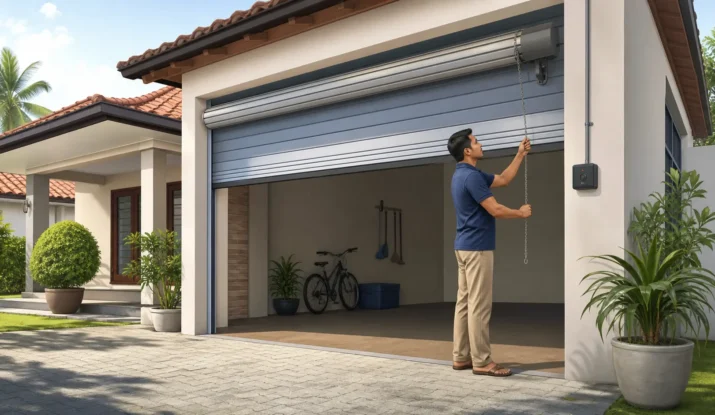
Automatic roller doors make daily access easier, but they still need a dependable backup plan. In Sri Lanka, power cuts can happen because of grid issues, weather, maintenance work, or unexpected failures. If your door depends only on electricity, you may be locked out of your garage, shop, warehouse, or storage area. A roller door manual override Sri Lanka property owners can actually use is not just a small feature. It is a basic part of safe, practical access.
Fast Facts: Roller Door Manual Override Sri Lanka
- Manual override lets you open or close an automatic roller door by hand during a power cut.
- It is important for Sri Lankan homes, shops, warehouses, and garages that depend on powered access.
- Battery backup is useful, but it does not replace a working manual release system.
- The override should be easy to access, demonstrated by the installer, and tested during maintenance.
- If the roller door is the only entrance, consider an external key release or another emergency access option.
Why Power Cuts Make Manual Override Essential
An automatic roller door works through a motor, control unit, remote receiver, and power supply. When electricity is available, the system opens and closes the door with little effort. When power fails, that same convenience can quickly become a problem.
Sri Lanka has experienced serious power interruptions in recent years, including a nationwide power outage in December 2023 and another countrywide power outage in February 2025. These events show why automatic access systems should never depend on power alone.
For a homeowner, a power cut may mean the car is stuck inside the garage. For a shop owner, it may delay opening or closing the business. For a warehouse, it can interrupt loading, deliveries, and staff movement. In each case, manual override keeps access possible when the motor cannot run.
What a Roller Door Manual Override Does
A manual override is a release mechanism that lets you disconnect the roller door from the motor drive. Once released, the door can be operated by hand, usually with a chain, crank, key release, or internal disengagement system, depending on the motor type.
The exact method depends on the door design and motor model. That is why the manufacturer manual should always be followed. A good installer should also show the customer how the release works before handing over the system.
The main purpose is simple. If electricity fails, the user should still be able to open or close the door without damaging the motor, curtain, guides, or locking system. This is especially important for properties where the roller door is the only vehicle access point.
Manual Override vs Battery Backup
Battery backup and manual override are both useful, but they are not the same. A battery backup powers the motor for a limited number of cycles during an outage. This is convenient because the user can often continue using the remote or wall switch.
A manual override is mechanical. It does not depend on battery charge, electronics, or control boards. If the battery is flat or the motor has an electrical fault, the manual override may still allow access.
For Sri Lankan homes and businesses, the best setup is often both. Battery backup helps with short interruptions. Manual override protects you when the outage lasts longer, the battery is not maintained, or the automation system itself has failed.
Safety also matters. Automatic garage door systems are commonly guided by opener safety rules and residential operator safety requirements in markets where these standards apply. While local requirements may differ, the same principle is useful in Sri Lanka: automatic doors should be designed with safe operation, emergency access, and manual release in mind.
Common Mistakes That Make Manual Override Fail
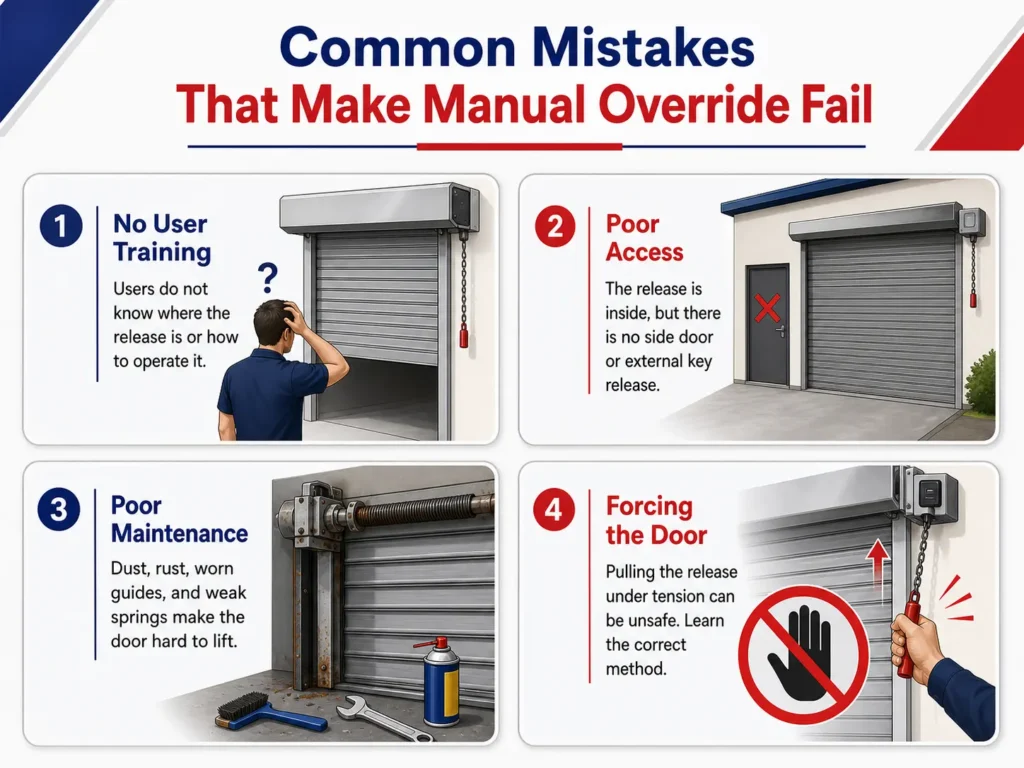
The biggest mistake is installing an automatic roller door without explaining the manual override to the user. A feature is not helpful if no one knows where it is or how to operate it.
Another mistake is poor access. If the release is inside the garage, but the garage has no side door, the user may still be locked out during a power cut. In such cases, an external key release or another access plan may be needed.
Lack of maintenance is also a problem. Dust, rust, worn guides, weak springs, poor alignment, and stiff bearings can make a door too heavy to lift manually. A manual override works best when the door itself is balanced and maintained.
Some users also pull the release while the door is under tension or partly open. This can be dangerous if the door is heavy or poorly balanced. The safest approach is to learn the correct procedure from the installer and avoid forcing the door.
What to Ask Before Installing an Automatic Roller Door
Before choosing an automatic roller door, ask how the manual override works. The answer should be clear and practical. If the explanation sounds confusing, ask for a demonstration.
Useful questions include:
- Can the door be opened manually during a power cut?
- Is the manual release inside, outside, or both?
- What happens if the garage has no second entrance?
- Does the motor support battery backup?
- How many times can the battery operate the door during an outage?
- How often should the override and battery be tested?
- Will the installer train household members or staff?
For commercial buildings, ask about staff access as well. A warehouse or shop may need more than one trained person. If only one employee knows the override procedure, the business is still vulnerable during emergencies.
Working with an experienced Sri Lankan supplier such as Vision Industries can help ensure the roller door, motor, manual override, and access plan are matched to the site conditions.
Helpful Guide
For long-term reliability, see this guide on roller door corrosion prevention in Sri Lanka, especially if your door is exposed to rain, humidity, or coastal air.
The Smart Decision for Sri Lankan Homes and Businesses
A roller door manual override Sri Lanka property owners can rely on should be easy to access, simple to operate, and tested during maintenance. It should not be treated as an optional extra or explained only after a problem occurs.
For homes, it protects daily convenience and avoids being trapped inside or locked outside. For businesses, it supports continuity, security, and staff safety. For warehouses and industrial sites, it helps keep deliveries and operations moving when electricity is unavailable.
The smartest choice is to plan for power cuts before they happen. Choose a quality automatic roller door, ask for a proper manual override, consider battery backup, and schedule regular servicing. A reliable system is not only one that works when power is available. It is one that still gives you control when power is gone.
FAQs
What is a roller door manual override?
A roller door manual override is a release system that lets you operate the door by hand when the motor has no power. It may use a chain, crank, key release, or internal disengagement mechanism, depending on the motor and installation.
Do automatic roller doors in Sri Lanka need manual override?
Yes, automatic roller doors in Sri Lanka should have manual override because power cuts can affect daily access. It is especially important for garages, shops, warehouses, and buildings where the roller door is the main entrance or vehicle access point.
Is battery backup enough during a power cut?
Battery backup is helpful, but it should not replace manual override. A battery can lose charge or fail over time. Manual override gives a mechanical backup when the battery, motor, or control system cannot operate the door.