
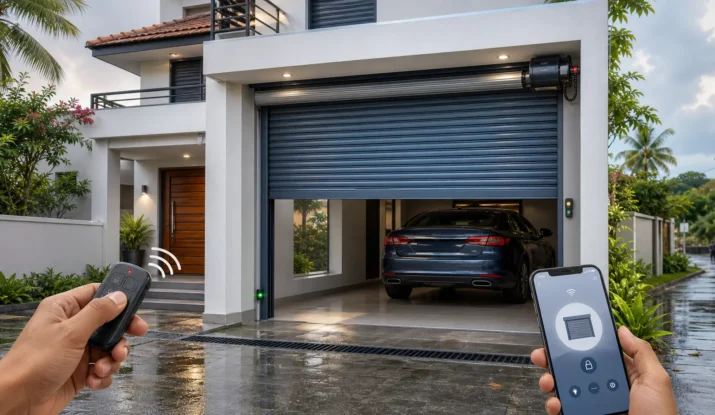
A remote control roller door Sri Lanka property owners choose should do more than open with a button. It should suit the door size, protect the entrance, work safely, and remain practical during power cuts. For homes, it saves time every day. For shops, warehouses, and garages, it improves access control and reduces manual handling. The best result comes from choosing the right motor, safety features, materials, and installer.
Fast Facts
- A remote control roller door Sri Lanka property owners choose should include the right motor, safety sensors, and manual release.
- Smart features are useful for app control, alerts, shared access, and remote monitoring.
- Power-cut planning is essential, especially for garages, shops, and high-use business entrances.
- Coastal humidity, rainfall, and salt air make material quality and maintenance important.
- Professional installation helps prevent motor strain, track problems, sensor faults, and early repairs.
Why Roller Door Automation Matters For Homes And Businesses
A roller door is often one of the largest moving parts on a property. If it is heavy, wide, or used many times a day, manual operation can become tiring and unsafe. Automation solves this by using a motor to lift and lower the door smoothly.
For homeowners, the main benefit is convenience. You can open the garage without leaving the vehicle, which is useful during rain or at night. For business owners, automation can improve daily workflow. Staff can open loading areas faster, and managers can limit who has access.
Security is another reason many buyers upgrade. A properly installed roller door with a motor, locking system, and controlled access can make forced entry harder. It also reduces the chance of staff leaving the door partly open after use.
Sri Lankan conditions also matter. Heavy rain, humidity, salt air near the coast, and dust in busy commercial areas can all affect moving parts. Local 24 hour rainfall observations are a useful reminder that weather exposure should be considered before choosing materials, seals, and maintenance intervals.
How Remote-Controlled And Smart Roller Doors Work
A remote-controlled roller door uses a motor connected to the roller mechanism. When you press the remote, the receiver sends a signal to the motor. The motor turns the barrel, and the curtain rolls up or down along the guide tracks.
A basic system may include a remote handset and wall switch. A more advanced setup may include a keypad, smartphone app, Wi-Fi module, battery backup, access logs, and alerts. Smart systems are helpful if you want to check whether the door is closed while away from the property.
Safety devices are also important. Modern powered doors often use photoelectric sensors or edge sensors. These help detect an obstruction and stop or reverse the door. Published entrapment protection requirements show why obstruction detection is a serious safety issue for automatic doors.
A manual release is another key part of the system. If the power fails, the user should still be able to disengage the motor and operate the door safely. This should be explained clearly during handover.
Features Worth Choosing, Not Just Paying For
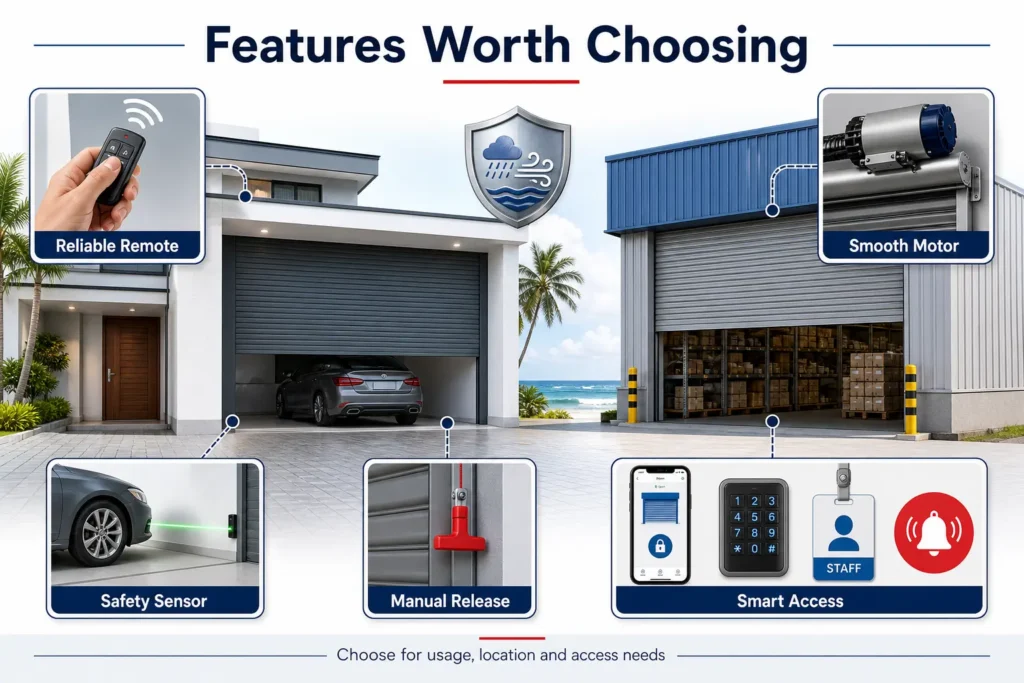
Not every feature is necessary for every property. The right choice depends on how often the door is used, where it is installed, and who needs access.
For most homes, a reliable remote, smooth motor, safety sensor, and manual release are the essentials. If the garage faces a busy road, fast and dependable opening matters. If the property is in a coastal area, corrosion-resistant materials and protected hardware should be a priority.
For businesses, access control becomes more important. A shop or warehouse may need multiple remotes, staff permissions, keypad entry, or timed opening. Smart alerts can help managers know if a door is left open after closing time.
Rolling-code remote technology is worth asking about. Older fixed-code remotes can be less secure because the same code is reused. Rolling-code systems change the transmitted code, making casual copying harder.
For smart roller doors, check the app quality, Wi-Fi range, password settings, and update support. General IoT cybersecurity guidance supports the same practical point: connected products should be managed with attention to security, maintenance, and support.
Common Setup Mistakes That Lead To Problems
The biggest mistake is choosing a motor without checking the door properly. The motor must match the door weight, width, usage frequency, and balance. If the motor is too weak, it may strain, overheat, or fail early.
Poor track alignment is another common issue. Even a good motor will struggle if the curtain rubs against the guides. This can create noise, uneven movement, and unnecessary wear.
Some buyers also ignore power-cut planning. In Sri Lanka, a roller door should have a clear manual release option. For high-use properties, battery backup may also be worth considering.
Smart systems can fail if Wi-Fi is weak near the garage or shutter area. Before choosing app control, check signal strength at the door location. A router inside the house may not cover a detached garage or shopfront.
Another mistake is blocking or ignoring safety sensors. Sensors should be installed at the correct height, kept clean, and tested during service. If a sensor is misaligned, the door may refuse to close or may behave unpredictably.
What To Check Before Installation Day
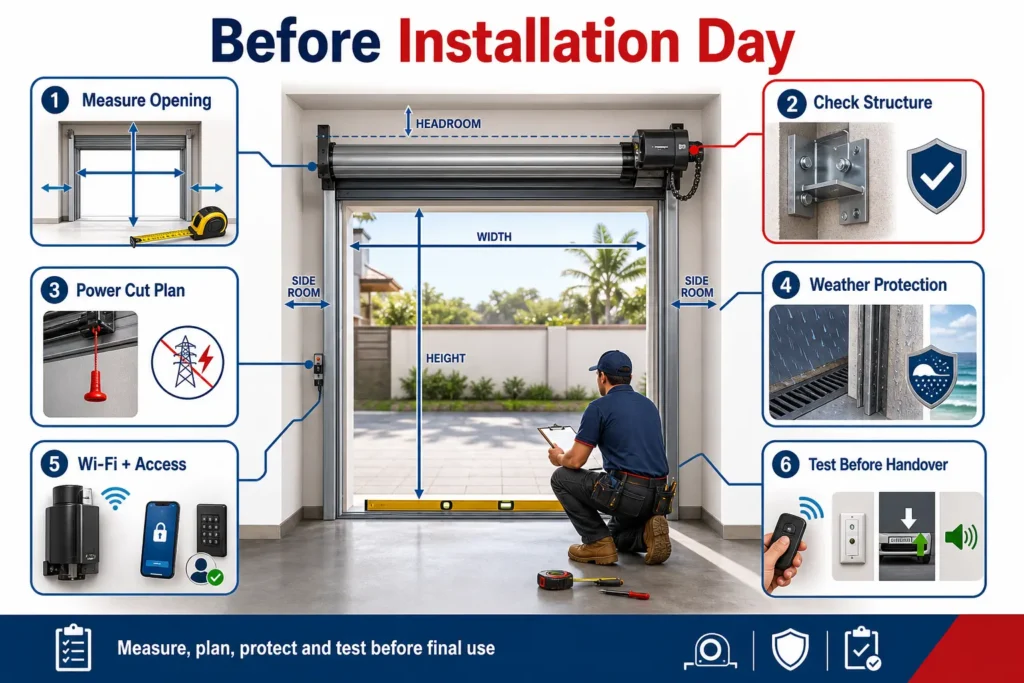
Before installation, measure the opening, side room, headroom, and floor level. The installer should confirm whether the existing structure can support the roller door and motor.
Ask how the door will be operated during a power cut. Also ask where the manual release will be placed and who should be trained to use it. For businesses, more than one responsible person should understand the process.
Check the environment around the door. Coastal properties may need better corrosion protection because air salinity and humidity can affect exposed metal over time. Wet areas may need attention to drainage so water does not sit around tracks and bottom seals.
For smart systems, check Wi-Fi strength at the motor location. Use a strong password and avoid sharing the main account with too many users. If staff need access, ask whether separate remotes or user permissions are available.
Before handover, test the door several times. Check remote range, wall switch operation, safety reversal, manual release, noise level, and stopping limits. Working with an experienced installer such as Vision Industries can help reduce mistakes at this stage.
Is A Smart Roller Door The Right Choice For You?
A smart roller door is a good choice if you want remote monitoring, phone control, alerts, or shared access. It suits busy homeowners, rental properties, commercial buildings, and businesses where managers need better visibility.
A simple remote-controlled system may be enough if you only need daily convenience. Many homes do not need app control, cameras, or advanced scheduling. A reliable motor with safety sensors and proper installation may provide better value than unnecessary features.
For high-use business entrances, choose durability first. The motor, curtain, tracks, and fixing points must handle frequent operation. Smart features are useful, but they should not replace strong mechanical design.
The best approach is to start with the door itself. Choose the right material, motor capacity, safety features, and release method. Then add smart control if it solves a real problem. That way, your roller door remains secure, convenient, and practical for Sri Lankan conditions.
Frequently Asked Questions
Is a remote control roller door suitable for Sri Lankan homes?
Yes, a remote control roller door is suitable for many Sri Lankan homes if the motor matches the door size and weight. Choose proper safety sensors, corrosion-resistant materials, and a manual release for power cuts.
What happens to an automatic roller door during a power cut?
During a power cut, the door should be operated through a manual release or battery backup if installed. Ask the installer to demonstrate the release system before handover so users can open the door safely.
Are smart roller doors more secure than normal remote doors?
Smart roller doors can improve monitoring, but security depends on setup quality. Use strong passwords, reliable Wi-Fi, trusted devices, rolling-code remotes, and proper access control. Mechanical strength and professional installation still matter most.