
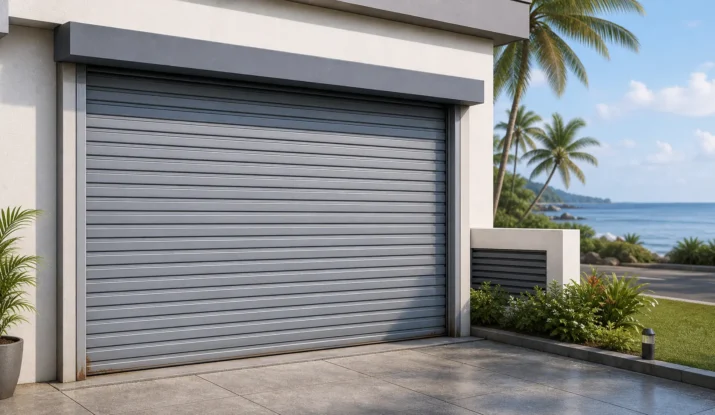
Roller door corrosion prevention is especially important for homes, shops, warehouses, and workshops near Sri Lanka’s coast. Salt air, high humidity, monsoon rain, and trapped moisture can make a strong door rust faster than expected.
The good news is that corrosion is not only a material problem. It is also a maintenance and installation problem. With the right finish, regular washing, proper drainage, and early repairs, a roller door can stay stronger, smoother, and better protected for longer.
Fast Facts
- Salt air and humidity make coastal roller doors rust faster than inland doors.
- Corrosion often starts on bottom bars, guide rails, scratches, fasteners, and cut edges.
- Fresh-water washing is one of the simplest roller door corrosion prevention steps.
- Galvanized or coated steel still needs maintenance near the sea.
- Early scratch repair, proper drainage, and regular servicing can reduce long-term repair costs.
Why Coastal Roller Doors Rust Faster
Coastal roller doors face a harsher environment because salt settles on metal surfaces. When salt mixes with moisture, it speeds up corrosion. This is why doors near the sea often show rust first on the lower slats, guide rails, locks, brackets, screws, and cut edges.
Sri Lanka’s coastal areas also deal with frequent rain and humidity. Sri Lanka’s official weather data is a useful reminder that local conditions vary by region and season. A roller door in a wet coastal area needs more care than a door in a protected inland building.
Rust often starts quietly. A small scratch, chipped paint spot, or wet track can become a larger repair issue if salt is not removed. Prevention is usually cheaper than replacing slats, tracks, springs, or the full door later.
Where Corrosion Usually Starts
Most roller doors do not rust evenly across the whole surface. Corrosion usually begins where protection is weakest or where water sits for too long.
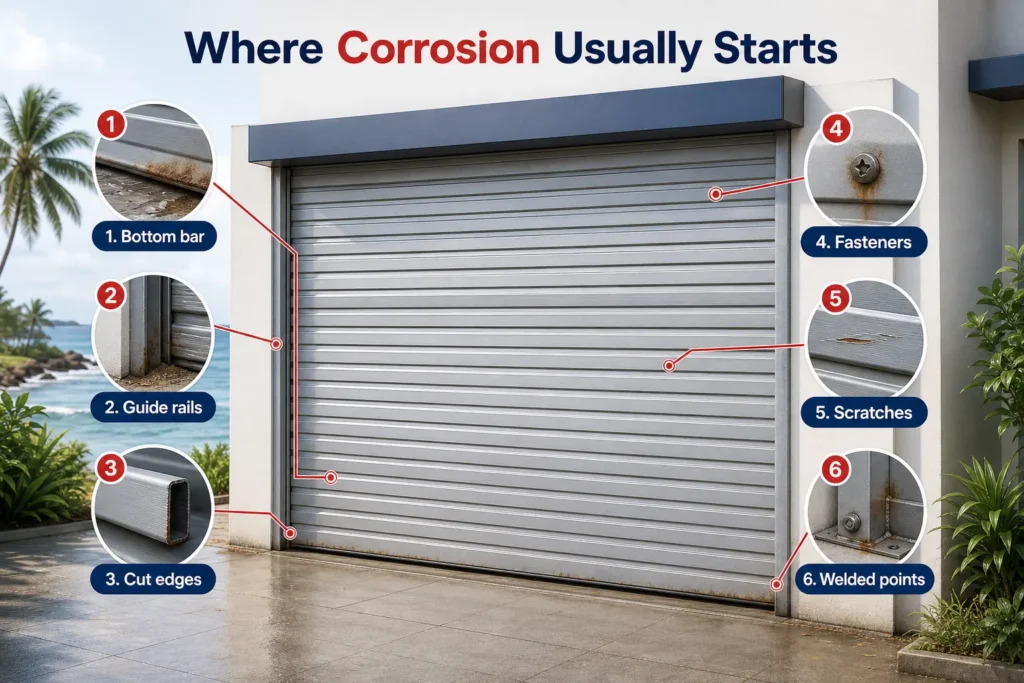
- Bottom bar: This area is close to rainwater, floor moisture, and dirt.
- Guide rails: Salt, sand, and debris can collect inside the tracks.
- Cut edges: Any exposed edge can rust faster if it is not sealed.
- Fasteners: Low-quality screws and bolts can stain nearby panels.
- Scratches: Damage from tools, vehicles, or daily use can expose bare metal.
- Welded points: Poorly finished welds can become early rust spots.
These areas should be checked during routine cleaning. If you see bubbling paint, orange staining, rough metal, or flaking coating, act early. Surface rust is easier to fix than deep corrosion.
Best Materials And Finishes For Coastal Areas
The right material depends on the building, budget, security needs, and exposure level. Galvanized steel is common because zinc coating helps protect the steel underneath. Painted or powder-coated finishes add another layer of protection and improve appearance.
For exposed coastal sites, coating quality matters. The international corrosion environment classification in ISO 12944-2 helps explain why different environments need different protective paint systems. A mild inland site and a salty coastal site should not be treated the same way.
Aluminium can also be useful in some coastal applications because it does not rust like steel. However, it can still suffer surface oxidation and may not offer the same strength for every security requirement. Stainless steel fasteners are often a smart upgrade because ordinary fasteners can rust first and spread stains onto the door.
Before ordering a roller door for a coastal property, ask the supplier about the base metal, coating system, paint finish, fastener quality, warranty conditions, and maintenance schedule. A cheaper door can cost more later if the finish is not suitable for salt exposure.
Roller Door Corrosion Prevention Checklist
The most effective roller door corrosion prevention routine is simple and consistent. Coastal doors should be washed more often than doors in dry inland areas.
- Rinse the curtain, bottom bar, guides, and visible brackets with clean fresh water.
- Use mild soap if salt, dirt, or oily marks remain.
- Avoid harsh acids, strong detergents, and abrasive brushes.
- Clean inside the guide rails where sand and salt collect.
- Dry areas where water tends to sit.
- Touch up scratches before rust spreads.
- Keep the floor area clear so water can drain away from the bottom bar.
- Use the correct lubricant on moving parts, based on installer guidance.
- Schedule professional servicing if the door becomes noisy, stiff, or uneven.
Testing standards such as salt spray testing can help assess coating quality in controlled conditions. Still, real-world performance depends on installation, exposure, cleaning, drainage, and maintenance.
Also Read
For a practical care routine after installation, see these roller door maintenance tips for Sri Lanka.
Mistakes That Make Rust Worse
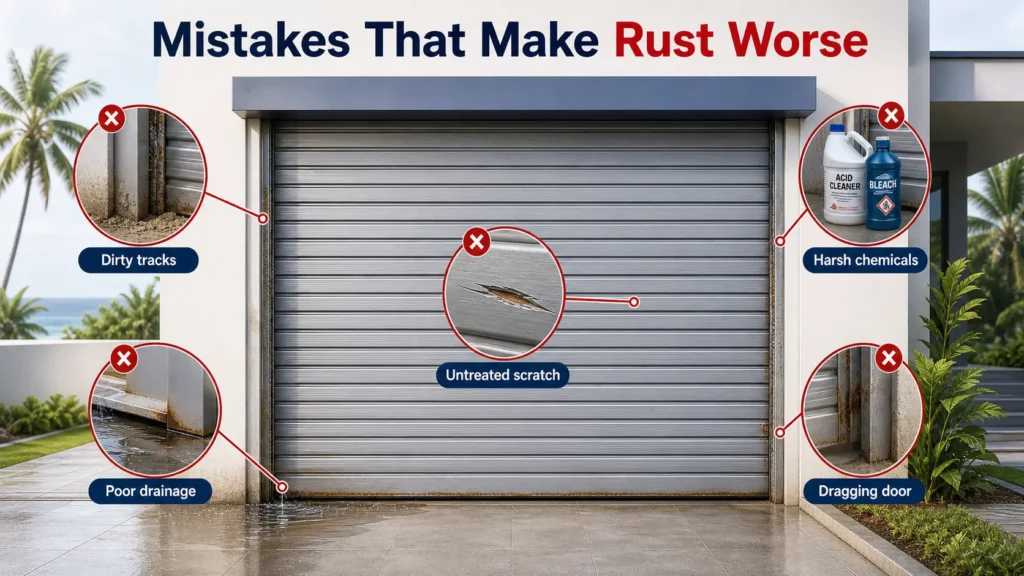
Many corrosion problems come from small mistakes repeated over time. One common mistake is washing only the front face of the door while ignoring tracks, bottom edges, and brackets. These hidden areas often hold the most salt.
Another mistake is ignoring scratches. If bare metal is exposed, moisture can reach the steel quickly. A small touch-up today can prevent a larger repair later.
Some owners also use harsh cleaning chemicals. Strong chemicals can damage protective coatings and make corrosion worse. Mild soap and fresh water are usually safer for routine cleaning.
Poor drainage is another serious issue. If rainwater pools near the doorway, the bottom bar stays wet for longer. This can shorten the life of the coating and increase rust around the lower edge.
Finally, do not ignore noisy or stiff operation. A door that drags in the guides may scratch its own coating each time it opens and closes.
When To Repair, Repaint, Or Replace
Light surface rust can often be cleaned, treated, and touched up. This is best done early, before the rust spreads under the coating. If the paint is bubbling in several areas, the door may need more serious surface preparation and repainting.
If slats are badly corroded, the door is difficult to operate, or the tracks are weakened, replacement may be safer than repeated patch repairs. Businesses should be especially careful because a failed roller door can affect security, access, and daily operations.
Working with an experienced Sri Lankan supplier such as Vision Industries can help property owners choose suitable materials, install the door correctly, and plan maintenance for coastal exposure.
For long-term planning, it also helps to consider Sri Lanka’s long-term climate risk context. Coastal buildings need durable access systems that can handle moisture, salt, rain, and daily use.
The best decision is not always the cheapest door. It is the door that suits the site, has the right corrosion protection, and can be maintained properly over time.
Frequently Asked Questions
How often should I wash a coastal roller door?
A coastal roller door should usually be rinsed every few weeks, and more often if it faces direct sea breeze. Fresh water removes salt before it damages the coating. Always clean the tracks, bottom bar, brackets, and fasteners.
Can galvanized roller doors still rust near the sea?
Yes, galvanized roller doors can still corrode in coastal areas if salt, scratches, or trapped moisture are ignored. Galvanizing helps protect steel, but it works best with proper washing, sealed cut edges, quality fasteners, and early touch-up repairs.
What is the best way to prevent roller door corrosion?
The best prevention is to combine suitable coastal-grade materials with regular cleaning and professional installation. Choose a proper coating system, avoid water pooling near the door, repair scratches quickly, and schedule servicing if the door becomes stiff or noisy.