
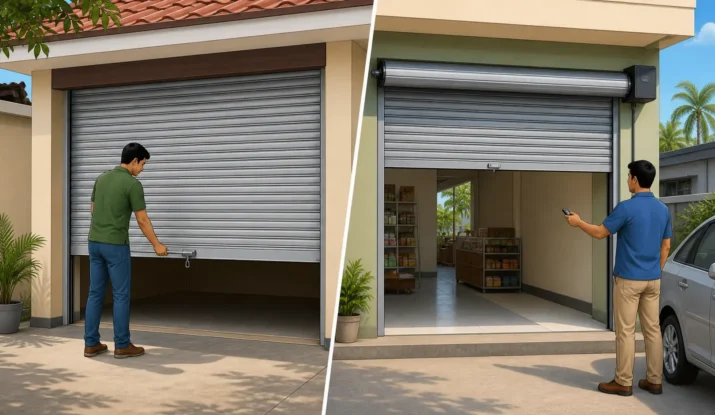
Choosing between manual vs automatic roller doors can feel simple at first. One costs less. The other feels more convenient. But once you think about daily use, safety, power cuts, maintenance, and long-term value, the decision becomes more important.
Imagine coming home during heavy rain. You stop the vehicle, step out, unlock the roller door, lift it, get back into the vehicle, drive in, then come out again to close it. Now imagine doing that at night, with children in the vehicle, or after a long day.
For a business owner, the story is different but just as real. A shop, warehouse, workshop, or showroom may need to open and close its roller door many times a day. If the door is heavy or wide, manual operation can slow down staff and create safety risks.
Both manual and automatic roller doors can work well. The best choice depends on how often you use the door, where you install it, who operates it, and what level of convenience and safety you expect.
Fast Facts
Best for light use: Manual roller doors work well for smaller openings, storage areas, and low-traffic spaces.
Best for daily access: Automatic roller doors are better for homes, shops, warehouses, and busy commercial entrances.
Power-cut concern: A good automatic roller door should include a manual release option for emergency operation.
Smart choice: Choose based on usage frequency, opening size, safety needs, budget, and after-sales support.
What Is a Manual Roller Door?
A manual roller door opens and closes by hand. Depending on the design, it may use a handle, lock, spring-assisted system, chain, or manual lever. Many homes, small shops, garages, storerooms, and secondary entrances use manual roller doors because they are simple and cost-effective.
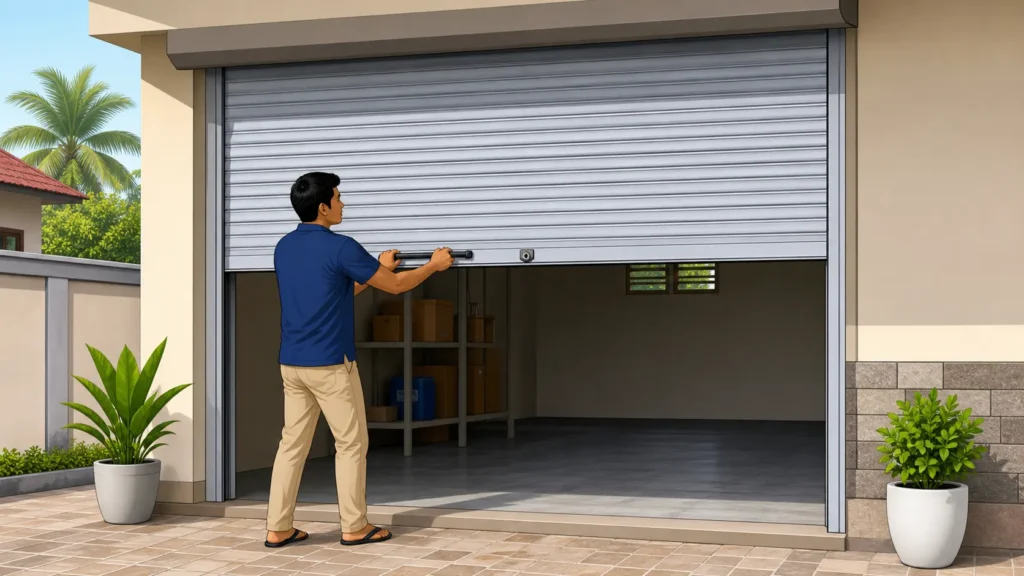
The biggest advantage is the lower upfront cost. A manual roller door has fewer electrical parts, so it usually costs less to install. It also does not depend on electricity, which can be useful during power cuts.
Manual roller doors make sense when the opening is not too large and the door does not need to move many times a day. For example, a small shop owner who opens the shutter once in the morning and closes it once at night may find a manual door practical enough.
However, manual operation can become tiring when the door is large, heavy, or used frequently. It may also feel inconvenient during rain, late-night arrivals, or busy business hours. So, while manual doors offer simplicity, they may not give the best daily experience for every property.
What Is an Automatic Roller Door?
An automatic roller door uses a motor to open and close the door. Users can control it with a remote, wall switch, or in some systems, smart access control. This makes it easier to operate the door without physically lifting or pulling it.
Automatic roller doors are popular for home garages, commercial buildings, warehouses, showrooms, hotels, factories, and high-use entrances. They work especially well when vehicles enter and exit often.
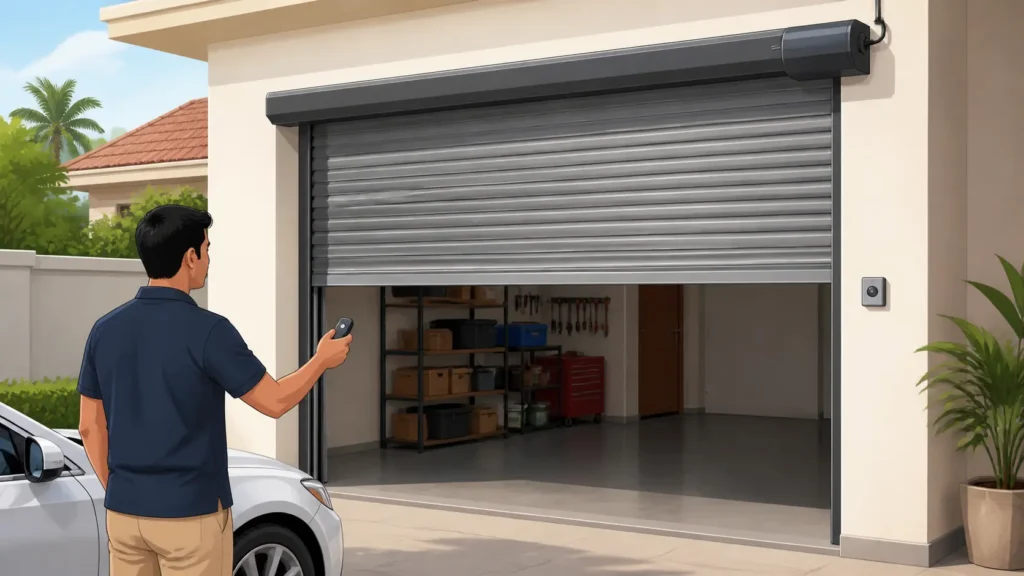
For homeowners, the main benefit is comfort. You can open the door from inside your vehicle, which helps during rain, at night, or when you need quick access. For businesses, automation can improve speed, staff safety, and workflow.
Quality automatic roller doors may also include safety features such as automatic reverse when the door meets an obstruction. Some systems include manual operation options, so the door can still work during a power failure. Vision Industries, for example, highlights remote controller roller doors with manual operation during power cuts and automatic reverse functionality.
The trade-off is cost. Automatic doors cost more upfront because they include a motor, control system, electrical setup, and additional components. They also need proper installation and periodic maintenance.
Manual vs Automatic Roller Doors: Key Differences
When comparing manual vs automatic roller doors, the right answer comes from practical use, not only price.
Cost: Manual roller doors usually cost less at the beginning. Automatic roller doors cost more because of the motor and control system. However, the extra cost may pay off if the door gets used daily.
Convenience: Automatic roller doors clearly win on convenience. You do not need to step out of the vehicle or lift a heavy door. Manual doors work fine for light use, but they can feel inconvenient with frequent operation.
Safety: Manual doors depend more on careful handling. Automatic doors can include safety features such as obstruction detection, reverse function, sensors, and controlled movement. Still, these features only work well when professionals install and maintain the system correctly.
Power cuts: Manual roller doors work without electricity. Automatic roller doors need power, but good systems include a manual release, lever, or pull cord. In Sri Lanka, this matters because buyers often worry about power interruptions.
Maintenance: Manual doors need basic checks on springs, tracks, locks, handles, alignment, and panels. Automatic doors need those checks too, plus motor, remote, sensor, wiring, and limit-setting inspections.
Best use: Manual doors suit light use and smaller openings. Automatic doors suit daily use, larger openings, and commercial access points.
Which Roller Door Is Best for Your Home?
For a home, the best choice depends on how often you use the entrance.
If you use the garage only occasionally, a manual roller door may be enough. It gives you security, privacy, and access control without a higher automation cost. It can also work well for storage areas, side entrances, or small residential spaces.
However, if you use the door every day, an automatic roller door becomes much more attractive. It saves time and effort every time you leave or return. It also helps elderly family members, busy parents, and anyone who wants safer vehicle access at night.
Think about real daily moments. Do you want to get out of the vehicle during heavy rain? Do you want to open a heavy door after work? Do you want children waiting in the vehicle while you unlock the entrance? If these situations happen often, automatic operation can improve comfort and safety.
For homes in coastal areas such as Galle and other parts of Sri Lanka, material quality also matters. Salt air, humidity, and heat can affect metal over time. Ask about zinc aluminium panels, powder coating, panel thickness, warranty, and after-sales service before you choose.
Which Roller Door Is Best for Your Business?
For a business, the cheapest option is not always the best long-term option.
A manual roller door may suit a small shop, storeroom, back entrance, or low-traffic area. If staff only open and close it once or twice a day, manual operation can keep costs under control.
But automatic roller doors often make more sense for busy commercial sites. Warehouses, workshops, showrooms, service centers, hotels, factories, and retail spaces may need regular access throughout the day. In those places, automation can save time, reduce physical strain, and support smoother operations.
A heavy manual door can slow down staff. It can also create safety issues if people rush, lift incorrectly, or struggle with the weight. Automatic operation helps teams open and close entrances with less effort.
Businesses should also think about image and customer experience. A smooth automatic roller door can make a showroom, garage, or commercial entrance feel more professional. It can also support better security when combined with quality locking systems, access control, and reliable installation.
What About Safety, Power Cuts, and Maintenance?
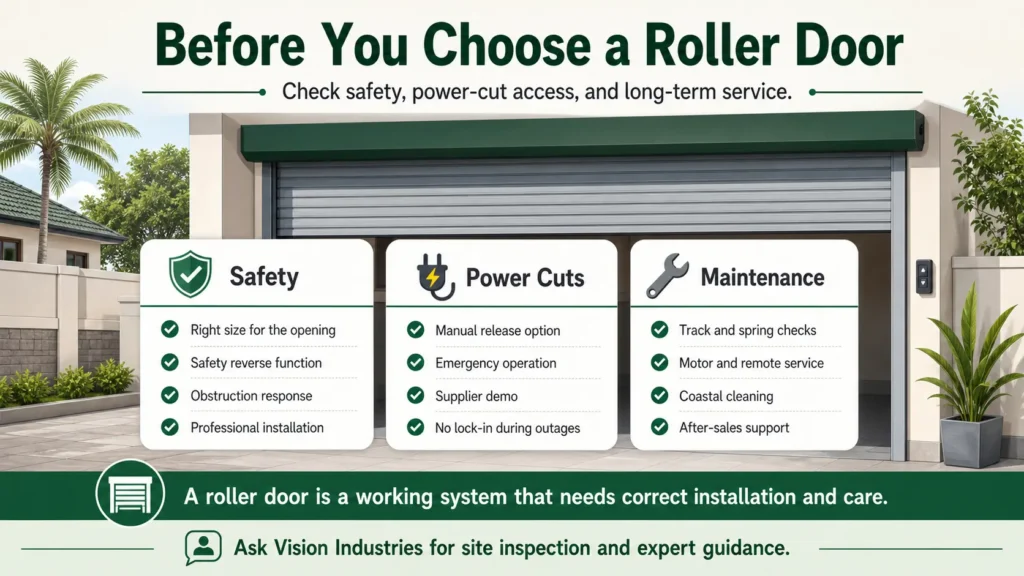
Safety should never come last. Whether you choose manual or automatic, the door must suit the opening size, usage level, and site conditions.
For automatic roller doors, ask about safety reverse function, obstruction response, manual release, motor quality, and installation standards. A motorized door should not only move easily. It should move safely.
Power cuts are another common concern. A good automatic roller door should include a way to operate it manually when electricity fails. Before installation, ask the supplier to show you how the manual release works.
Maintenance also protects your investment. Manual doors need periodic checking, especially if they face rain, dust, salt air, or heavy use. Automatic doors need regular service for both mechanical and electrical parts. For businesses, regular maintenance can prevent downtime and avoid sudden repair costs.
This is where after-sales service matters. Vision Industries positions itself as a one-stop metal solutions provider with professional installation experience and customer support. That matters because a roller door is not only a product. It is a working system that needs correct measurement, fabrication, installation, and long-term care.
Final Recommendation
Choose a manual roller door if your budget is limited, the opening is small or medium-sized, and you only use the door once or twice a day. It is simple, reliable, and cost-effective for light-use spaces.
Choose an automatic roller door if you use the entrance daily, operate a business, need faster access, want remote-control convenience, or have a larger and heavier door. It offers better comfort and can support stronger safety and workflow benefits.
In the end, the best choice between manual vs automatic roller doors depends on your property, usage, budget, and location. For homeowners and businesses in Sri Lanka, it also helps to consider power cuts, coastal weather, material quality, and after-sales support.
A professional site inspection can make the decision much easier. Vision Industries can help you choose, manufacture, install, and maintain the right roller door for your home, shop, warehouse, or commercial project.
FAQs
Is a manual or automatic roller door better for daily use?
Answer: An automatic roller door is usually better for daily use because it saves time and reduces physical effort. A manual roller door can still work well for smaller openings or spaces that are opened only once or twice a day.
What happens to an automatic roller door during a power cut?
Answer: A quality automatic roller door should include a manual release option, lever, or pull cord so you can open or close it when electricity fails. Before installation, ask the supplier to show you how the emergency release works.
Which roller door is best for a business in Sri Lanka?
Answer: For a busy shop, warehouse, showroom, or commercial entrance, an automatic roller door is often the better choice because it improves convenience, staff safety, and workflow. For low-use storage areas or secondary access points, a manual roller door may be enough.