
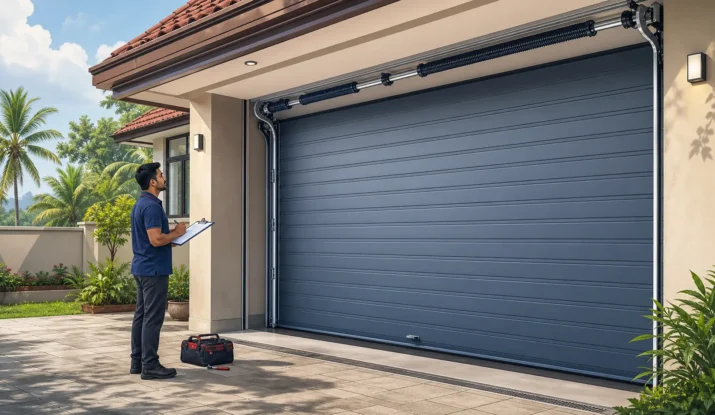
Roller doors work hard in Sri Lankan homes, shops, garages, warehouses, and commercial buildings. They protect property, save space, and make daily access easier. But without regular care, even a strong roller door can become noisy, heavy, stuck, or unsafe.
Good roller door maintenance Sri Lanka property owners can follow is not complicated. The aim is simple: keep the door clean, check for early warning signs, protect moving parts, test safety features, and call a professional before a small fault becomes an expensive repair.
Fast Facts: Roller Door Maintenance Sri Lanka
- Clean tracks regularly to prevent jamming, scraping, and uneven movement.
- Check for rust, loose screws, bent rails, worn seals, and unusual noise.
- Use only a suitable light lubricant, and always clean before lubricating.
- Test automatic safety features, remotes, manual release, and stopping points.
- Book professional servicing yearly, or every six months for coastal and high-use doors.
Why Roller Door Maintenance Matters in Sri Lanka
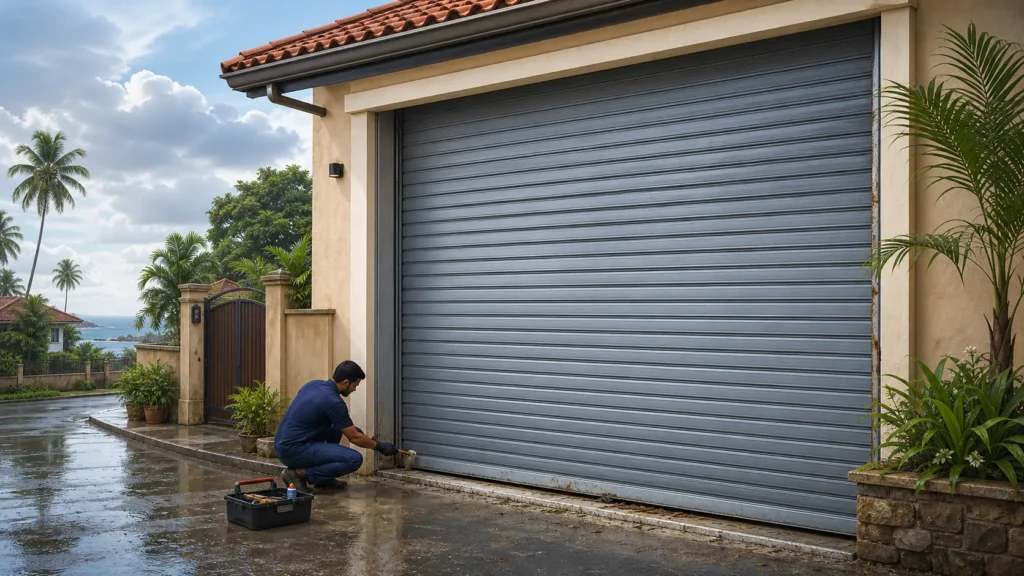
Sri Lanka’s weather can be tough on metal access systems. Many areas face heavy rain, high humidity, dust, sea air, and sudden weather changes. The Sri Lanka Department of Meteorology provides information on rainfall, humidity, wind, and seasonal weather conditions, all of which can affect exposed doors over time.
For coastal properties in places such as Galle, Matara, Colombo, Negombo, Trincomalee, and Jaffna, salt in the air can also increase corrosion risk. The American Galvanizers Association notes that warmer coastal climates can be more corrosive to galvanized steel. This is one reason regular cleaning and rust checks matter.
Maintenance is also about safety. A roller door is a large moving system. If tracks, springs, cables, brackets, sensors, or motors wear out, the door may stop working correctly. For homeowners, that can affect convenience and security. For businesses, it can cause downtime, delivery delays, and safety concerns.
1. Keep the Tracks and Door Surface Clean
Dirty tracks are one of the most common reasons roller doors become stiff or noisy. Dust, leaves, sand, insects, small stones, and dried mud can collect inside the side guides. Once the door starts rubbing against this debris, it may move unevenly or get stuck halfway.
Clean the tracks with a soft brush or dry cloth. Remove loose debris first. Then wipe the door curtain and visible metal parts with mild soap and water. Avoid harsh chemicals, abrasive pads, and high-pressure water because they can damage coatings or push water into areas where it should not go.
After heavy rain, check whether water is collecting near the bottom rail or inside the guide area. Standing water can speed up rust, especially if the door is exposed to coastal air. For commercial premises, add track cleaning to the weekly cleaning routine.
2. Inspect Moving Parts Before Small Faults Grow
A quick inspection can prevent many roller door problems. Open and close the door slowly. Listen for grinding, scraping, rattling, or unusual motor strain. Watch whether the door moves straight or leans to one side.
Look for loose screws, bent guide rails, cracked slats, worn locks, damaged rubber seals, frayed cables, and rust spots. Do not place your hands inside the guide rails while the door is moving. If a part looks damaged, stop using the door until it is checked.
Door safety guidance from DASMA recommends monthly safety checks and professional annual inspections for garage door systems. This same habit is useful for roller doors because both systems depend on balanced movement and safe hardware.
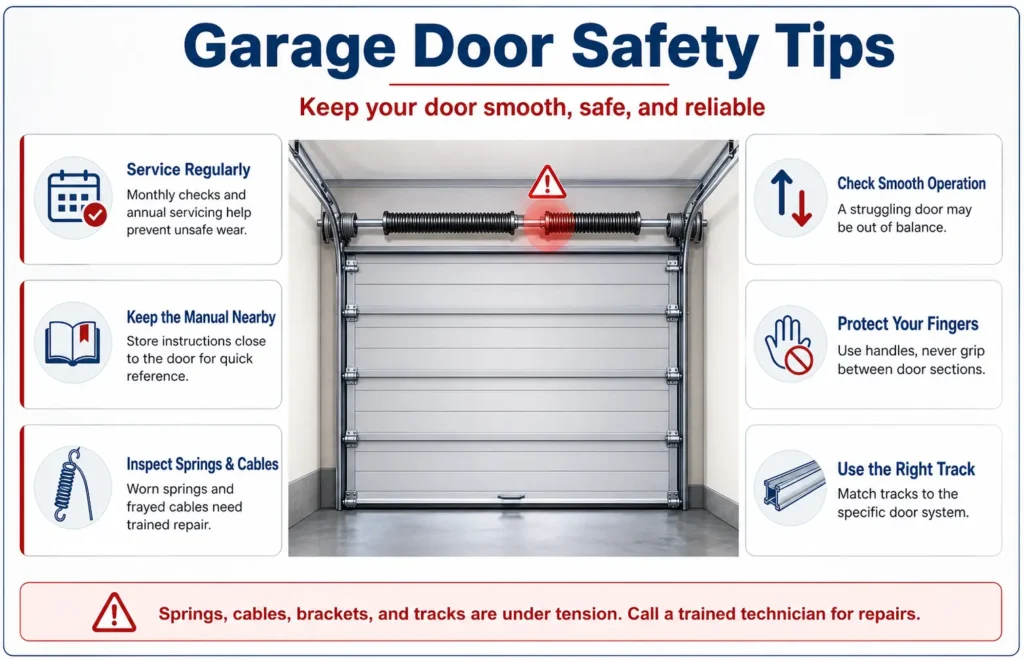
If the door suddenly feels heavier than usual, do not force it. A heavy manual door may point to a spring or balance issue. These parts can be dangerous to adjust without training.
3. Lubricate the Right Parts the Right Way
Lubrication helps reduce friction, but using the wrong product can create more problems. Thick oil or greasy sprays can attract dust and form a sticky layer inside the tracks. In Sri Lankan conditions, that sticky layer can trap sand, road dust, and moisture.
Use a light lubricant recommended by the door or motor manufacturer. For many roller door systems, a dry silicone-based spray may be suitable for selected moving parts. Always clean first. Lubricating over dirt simply locks grime into the system.
Apply only a small amount. More lubricant does not mean better performance. Wipe away excess liquid so it does not drip onto the door curtain, floor, or electrical parts.
Avoid lubricating electrical controls, motor housings, safety sensors, or parts you do not understand. If the door still makes noise after cleaning and light lubrication, the issue may be alignment, worn hardware, or motor strain.
4. Test Safety Features and Automatic Operation
If your roller door is motorized, safety checks are essential. Test the remote, wall switch, manual release, limit settings, and automatic stopping function. The door should move smoothly and stop where it should.
Automatic garage door safety rules from the U.S. Consumer Product Safety Commission advise owners to test the reversing feature monthly. While roller door systems vary, the principle is important: automatic doors must not keep closing when they detect an obstruction.
Keep children away from controls. Do not let anyone stand under a moving door. If the door reverses unexpectedly, stops halfway, or only works when the button is held down, arrange an inspection.
Power cuts are another practical issue in Sri Lanka. Make sure you know how to use the manual release safely. For businesses, check whether backup power or manual access is needed during outages.
Helpful Guide
If you are comparing door options, this guide on manual vs automatic roller doors can help you choose the right setup for daily use, safety, and convenience.
5. Schedule Professional Servicing Before Breakdowns
Some roller door maintenance can be handled by the owner. Cleaning, visual checks, and simple testing are useful habits. But springs, cables, drums, motors, brackets, and control systems should be checked by trained technicians.
For most residential roller doors, one professional service each year is a sensible starting point. High-use commercial doors, warehouse doors, coastal doors, and doors exposed to dust or rain may need checks every six months.
A proper service should include track alignment, curtain movement, motor performance, safety features, mounting points, locks, fasteners, corrosion, and wear. The technician should also explain any issue in clear language before repairs are made.
Working with an experienced Sri Lankan provider such as Vision Industries can help property owners avoid common installation and maintenance mistakes. This is especially useful for coastal sites, commercial premises, and automated roller door systems.
Keep Your Roller Door Safe, Smooth, and Reliable
The best maintenance routine is simple and consistent. Clean the tracks, inspect the door, lubricate carefully, test safety features, and arrange professional servicing before a breakdown happens.
For Sri Lankan properties, weather exposure makes this even more important. Rain, humidity, salt air, dust, and daily use can all affect performance. A few minutes of regular care can protect safety, reduce repair costs, and help your roller door last longer.
Frequently Asked Questions
How often should roller door maintenance be done in Sri Lanka?
Roller doors should be checked monthly and professionally serviced at least once a year. Coastal, commercial, or high-use doors may need servicing every six months because humidity, dust, rain, and salt air can increase wear.
What is the most common reason a roller door gets stuck?
Blocked or dirty guide tracks are a common reason roller doors get stuck. Dust, leaves, stones, rust, or bent tracks can stop smooth movement. Clean the tracks first, but call a technician if the door still feels heavy.
Can I repair a noisy roller door myself?
You can clean the tracks and apply a suitable light lubricant if the manufacturer allows it. Do not adjust springs, cables, motors, or brackets yourself. These parts can be dangerous and should be handled by trained technicians.