
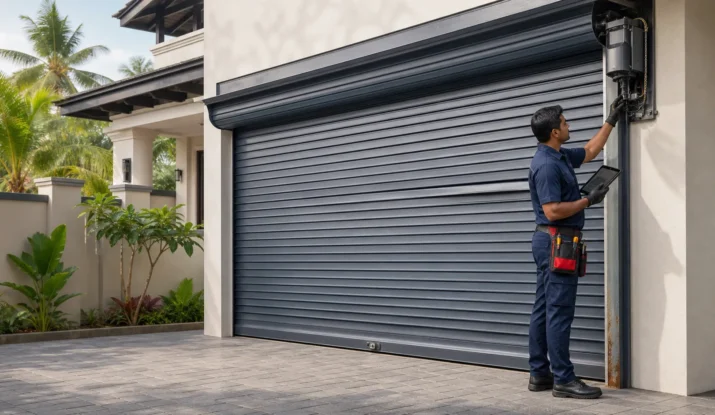
A roller door that sticks, tilts, or refuses to open can disrupt your day and leave a property unsecured. However, the motor is not always the cause. A blocked guide, damaged curtain, worn bearing, or power issue may produce similar symptoms. This guide to roller door repair in Sri Lanka explains the warning signs, common causes, safe checks, professional fixes, and ways to prevent another breakdown.
Fast Facts: Roller Door Repairs
- Act early: Sticking, scraping, uneven travel, unusual noise, and visible rust can warn of a developing failure.
- Do not force it: Continuing to operate a jammed or crooked door can damage the curtain, guides, supports, and motor.
- Check simple causes: Confirm the power supply, breaker, isolator, remote battery, and accessible guides before arranging automatic roller door repair.
- Avoid dangerous DIY work: Springs, cables, barrels, bottom brackets, motors, and safety controls require trained handling.
- Consider local exposure: Sri Lankan rain, humidity, coastal air, and debris can increase corrosion and maintenance needs.
- Fix the cause: Effective roller door repair in Sri Lanka should include diagnosis, component repair, alignment, full-cycle operation, and safety testing.
Seven Signs Your Roller Door Needs Attention
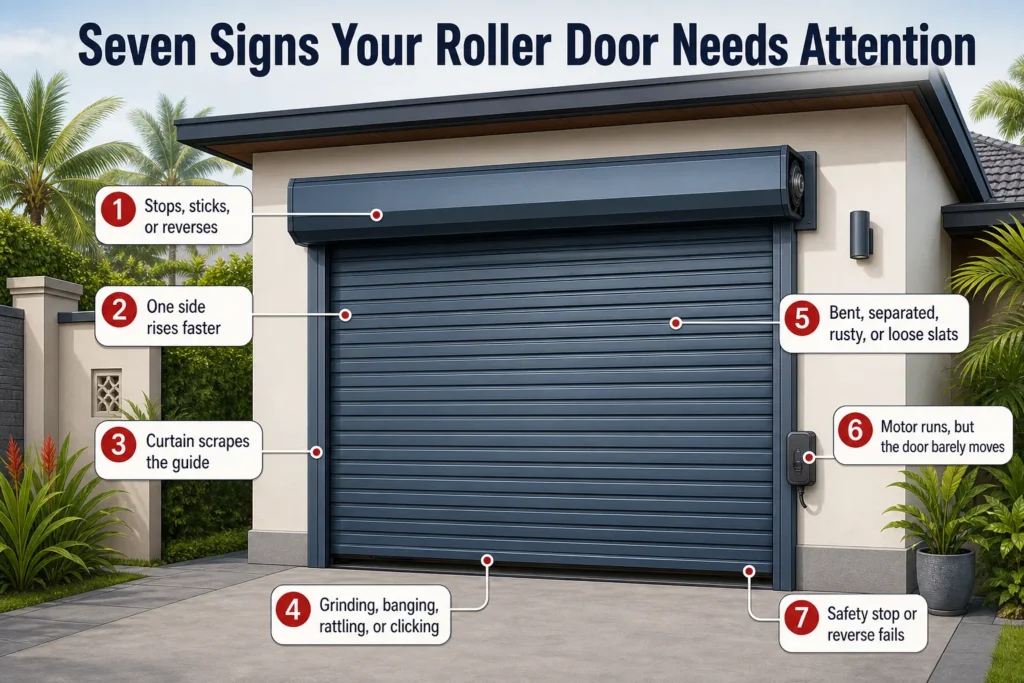
Roller door problems usually develop before the door stops completely. Early repairs can limit damage to the curtain, guides, motor, and surrounding structure.
Watch for these warning signs:
- The door stops, sticks, or reverses unexpectedly.
- One side rises faster than the other.
- The curtain scrapes against a guide.
- You hear grinding, banging, rattling, or repeated clicking.
- Slats look bent, separated, rusty, or loose.
- The motor runs, but the door barely moves.
- A powered door no longer stops or reverses correctly.
Stop using a door that hangs unevenly, drops suddenly, has a loose cable, or is partly outside its guides. Keep people and vehicles away. Powered doors can trap or crush users when safety devices or supporting parts fail.
What Usually Causes Roller Door Failures?
A roller door curtain travels through side guides and coils around a barrel above the opening. A fault anywhere along that path can affect the entire system.
Dirt, stones, damaged weather seals, and loose objects can obstruct the guides. Impact damage or loose fixings may push a guide out of alignment. The curtain then rubs, twists, or jams.
Bearings and moving connections wear with use. Commercial doors may complete many cycles each day, so worn parts can appear sooner than on a residential garage.
Springs and cables help manage the door’s weight. A broken or incorrectly tensioned component may make the door feel unusually heavy or cause uneven movement. These parts store substantial energy and require a trained technician.
Automatic doors add possible electrical faults. A failed remote battery, power interruption, tripped breaker, damaged control, incorrect limit setting, or motor fault can stop operation. A heavy or misaligned door can also overload a healthy motor.
Sri Lanka’s rainfall and high humidity make corrosion another concern. Coastal air may speed up deterioration around guides, fasteners, curtain edges, and electrical connections.
Safe Checks You Can Make Before Booking a Repair
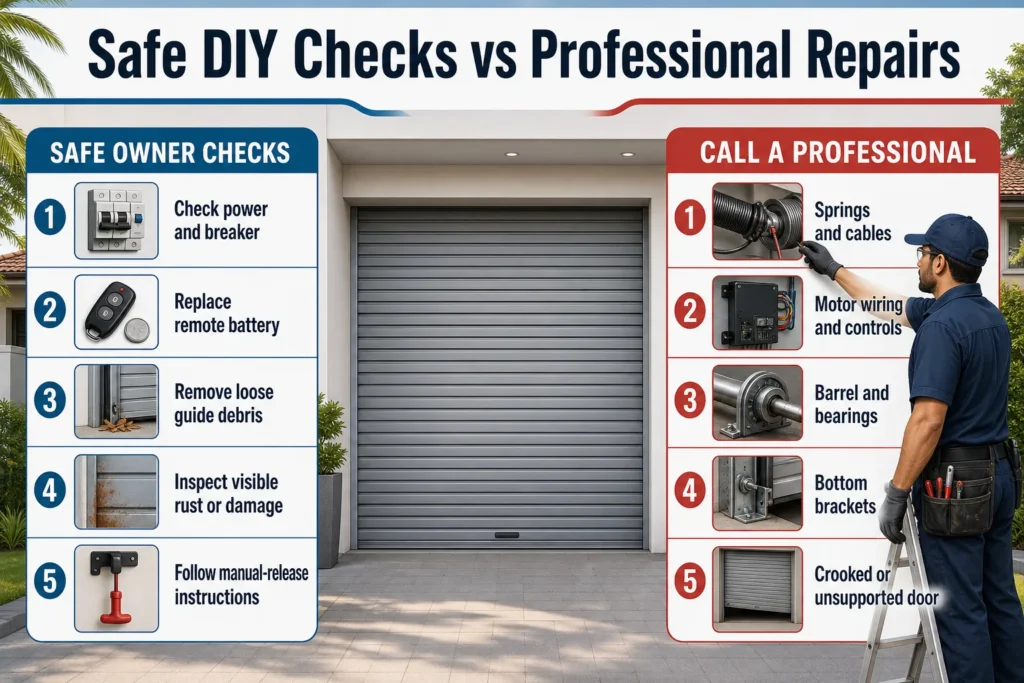
Begin with simple checks that do not require dismantling the door.
For an automatic door, confirm that the property has power. Check the breaker, isolator, wall control, and remote battery. If the opener has indicator lights or an error code, record them for the technician.
Look along both guides for loose debris. Remove only material that is easy to reach while the door is stationary. Do not force the curtain or place your hands near pinch points.
Inspect the curtain, guides, visible fasteners, and accessible cables from a safe distance. Note rust, fraying, bent slats, gaps, or loose brackets. Photos can help a repair company prepare the correct parts.
Use the manual release only as described in the manufacturer’s instructions. A door with a failed spring or support component may be too heavy to control manually.
Do not adjust springs, cables, bottom brackets, barrels, motor wiring, or safety controls yourself. These repairs need suitable tools, training, and testing.
How Technicians Fix Common Roller Door Problems
The correct repair begins with the underlying cause, not just the loudest symptom.
A technician may clean and realign the guides if the curtain rubs or sticks. Bent or separated slats may need repair or replacement. Damaged guides, brackets, bearings, fasteners, or weather seals may also require replacement.
An uneven or unusually heavy door needs a balance and support-system inspection. The technician should examine springs, cables, attachment points, and the barrel before adjusting or replacing components.
For an automatic door, diagnosis should cover the power supply, controls, wiring, travel limits, safety devices, drive system, and motor. Replacing the motor alone will not solve a heavy or misaligned door.
After the repair, the technician should operate the door through complete cycles. A powered system should also receive functional safety checks. Regular inspection and maintenance help powered doors remain safe as components wear.
Repair or Replace? Make the Right Long-Term Choice
Repair usually makes sense when the damage is limited and the main structure remains sound. Examples include a minor guide adjustment, a replaceable bearing, a control fault, or several damaged slats.
Replacement may offer better value when:
- Corrosion affects large areas of the curtain or guides.
- The opening or supporting structure has changed.
- Major parts are obsolete or unavailable.
- The door has repeated failures.
- Several safety-critical components need replacement.
- The curtain is badly distorted after an impact.
- Repair costs approach a large share of a safer new system.
Ask for both options when the answer is unclear. Compare the full scope, warranty, expected service life, safety features, and future parts availability, not only the initial price.
Choosing Roller Door Repair in Sri Lanka
A reliable repair provider should inspect the complete door before giving a final recommendation. Ask what failed, why it failed, which parts will be replaced, and how the repaired system will be tested.
A written quotation should separate labour, parts, and any additional work. It should also explain warranty coverage. For businesses, ask whether the technician can schedule preventive servicing around the door’s actual operating cycles.
Local exposure matters. Properties near the coast may need more frequent corrosion checks. Doors exposed to wind-driven rain, dust, or busy loading areas may also need shorter service intervals.
Owners can help by keeping guides clear, cleaning accessible surfaces, watching for rust, and reporting changes in sound or movement early. Lubrication should follow the door manufacturer’s instructions because the wrong product can attract dirt or affect components.
Working with an experienced provider such as Vision Industries gives homeowners and businesses access to inspection, repairs, automation support, and ongoing maintenance. The safest approach is simple: stop using a dangerous door, avoid high-tension parts, and repair the real cause before more components fail.
Frequently Asked Questions
Why is my roller door not opening?
A roller door may not open because of a power interruption, blocked guide, damaged curtain, failed control, worn motor, or spring problem. Check the supply and visible obstructions first. Stop using the door if it hangs unevenly or feels unusually heavy.
Can I repair a roller door myself?
You can check the power, replace a remote battery, and remove loose debris from accessible guides. Do not adjust springs, cables, barrels, bottom brackets, or electrical controls. These components can release stored energy or cause the door to fall unexpectedly.
Is repairing an old roller door better than replacing it?
Repair is usually suitable when damage is limited and major parts remain sound. Replacement may offer better value if corrosion is widespread, failures keep returning, parts are unavailable, or several safety-critical components need work. Ask for itemised repair and replacement quotations.