
A roller door can look suitable on the day it is installed yet become expensive if its material does not match the site. This roller door materials comparison explains how aluminium, steel, Zincalume and stainless steel differ in strength, weight, corrosion resistance, maintenance and cost. The right answer depends on your location, opening and security needs, not one material name.
Fast Facts: Roller door materials comparison
- Aluminium: Lightweight, naturally corrosion-resistant and practical for many homes, shopfronts and coastal properties, but thin profiles can dent.
- Steel: Strong and economical for security or impact-prone openings, although its protective coating must remain intact to prevent rust.
- Zincalume: An aluminium-zinc alloy-coated steel product, not a separate base metal. It offers steel strength with improved corrosion protection.
- Stainless steel: Suits demanding coastal, hygienic or corrosive settings. Grade 316 usually performs better than grade 304 around chlorides, but it still needs cleaning.
- Best decision rule: Compare exposure, security, opening size, operating cycles, material grade, profile, compatible components and whole-life cost.
- Before buying: Request the grade, thickness, coating, finish, motor specification, warranty exclusions and maintenance schedule in writing.
Why the curtain material changes more than appearance
The curtain is the moving surface that rolls around the drum above the opening. Its material affects the door’s weight, impact resistance and response to moisture.
A heavier curtain can require different springs, brackets and motor capacity. A material that performs well inland may also need more care near salt spray.
However, the metal alone does not determine security. A thin steel curtain with weak guides may perform worse than a properly designed aluminium system. Compare the slat profile, thickness, guides, locks and fasteners as one assembly.
Cost needs the same full-system approach. Include the finish, motor, installation, cleaning and possible corrosion repairs. The cheapest curtain can produce a higher ownership cost if it needs frequent repainting or early replacement.
Roller door materials comparison at a glance
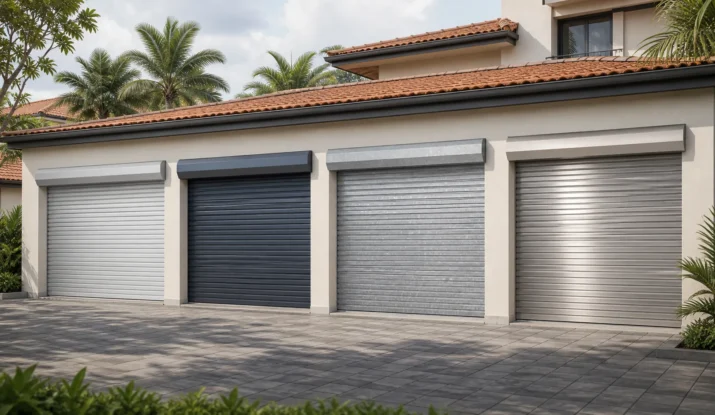
- Aluminium is lightweight and naturally corrosion-resistant. It suits homes, shopfronts and many humid or coastal settings, but thinner slats can dent.
- Coated carbon steel provides high strength at a practical price. Damage to its protective finish can expose the base metal to rust.
- Zincalume combines a steel base with an aluminium-zinc alloy coating. It balances steel strength with better corrosion protection than uncoated steel.
- Stainless steel provides strong corrosion and hygiene performance. Its higher material and fabrication costs usually limit it to demanding sites.
Aluminium roller doors
Aluminium develops a protective oxide layer when exposed to air. It does not form the red iron oxide commonly called rust. Anodising or powder coating can provide further protection and colour.
Its low weight can reduce the load placed on the door’s springs and operator. This makes aluminium useful for frequently operated doors, although the finished door must still be weighed and matched to a suitable motor.
Aluminium is not automatically a light-duty choice. Extruded, double-wall and reinforced profiles can provide substantial strength. However, thin aluminium can dent under vehicle, trolley or deliberate impact.
Choose aluminium when low weight, appearance and resistance to humid air matter. Ask for the alloy, profile, wall thickness, finish and maximum approved opening size.
Steel roller doors
Carbon steel is widely used because it is strong, readily formed and usually economical. It can suit garages, shops, warehouses and industrial openings where impact resistance and security are priorities.
Bare carbon steel can rust when moisture and oxygen reach it. Manufacturers manage this risk through galvanising, metallic coatings, paint or powder coating. Any protective system needs careful handling because scratches and damaged edges can become corrosion points.
Steel curtains are generally heavier than comparable aluminium curtains. That weight affects the barrel, springs, guides and motor. It can also make manual operation less convenient.
Choose steel where security, impact resistance or a large opening carries more weight than minimum maintenance. Confirm the steel thickness, coating, finish and repair process for scratches.
Zincalume roller doors
Zincalume is not solid zinc or a separate structural metal. It is steel protected by a metallic alloy coating. A traditional regional specification uses 55% aluminium, 43.5% zinc and 1.5% silicon in the coating.
The steel core provides strength. The aluminium-rich portion creates barrier protection, while zinc helps protect exposed areas sacrificially. Product formulations and coating masses can vary, so the brand name alone is not a complete specification.
Zincalume can be a practical middle option for sheds, commercial properties and industrial doors. It normally offers better weather resistance than bare or lightly protected steel without the cost of stainless steel.
It still needs inspection. Cut edges, deep scratches, incompatible fasteners and surfaces sheltered from rain can deteriorate. Severe coastal exposure also requires confirmation from the supplier rather than a general corrosion claim.
Stainless steel roller doors
Stainless steel contains enough chromium to form a protective passive film. Grade selection affects how well that film resists a particular environment.
Grade 304 may suit many indoor or mild settings. Grade 316 or 316L is often specified for coastal land-based applications because it provides better resistance to chloride-related pitting.
Stainless steel is valuable in food processing, health care and other sites that require regular cleaning. It can also suit premium coastal or industrial projects where downtime and corrosion costs are high.
It is not completely stain-free. Salt deposits, rough finishes, fabrication contamination and crevices can cause brown tea staining or local corrosion. Correct fabrication, smooth finishes and cleaning remain necessary.
Match the material to Sri Lanka’s conditions
Sri Lanka receives about 2,000 millimetres of rain in an average year. High humidity, monsoon rain and coastal salt can expose a door to moisture for long periods.
For an inland residential garage, coated steel or Zincalume may offer a sensible balance of cost and strength. Aluminium can reduce maintenance and provide a clean finish where moderate impact resistance is sufficient.
For a coastal home or shop, aluminium or correctly graded stainless steel deserves consideration. Coated steel may still work, but its suitability depends on the coating system, distance from salt water and cleaning schedule.
Busy warehouses need a different calculation. Opening size, vehicle impact, wind exposure and operating cycles may make a heavy-duty steel or coated-steel system more suitable. Stainless steel may justify its price where aggressive chemicals, hygiene rules or costly downtime are present.
Check the entire door for compatibility. An aluminium curtain attached to unsuitable steel fasteners can create a local corrosion problem even when the main curtain remains sound.
Avoid these expensive material mistakes
Do not accept “steel,” “aluminium” or “stainless” as a complete specification. Ask for the grade, thickness, slat profile, coating and finish in writing.
Avoid choosing by curtain price alone. The quotation should identify the motor, manual release, guides, brackets, safety controls, installation, warranty and maintenance requirements.
Do not assume corrosion resistance means maintenance-free. Remove salt and dirt, keep drainage paths open and inspect coating damage. Sheltered surfaces may need manual washing because rain cannot clean them.
Avoid mixing metals without compatible fasteners, coatings or isolating barriers. Ask the supplier how the design controls galvanic corrosion.
Finally, do not use a light domestic specification for a busy commercial opening. Frequent cycles, wide spans and impact risks require a door designed for that duty.
Use five questions to make the final decision
Ask these questions before requesting a final quotation:
- How much salt, rain, humidity or chemical exposure reaches the door?
- What security and impact resistance does the complete assembly provide?
- Is the curtain approved for the opening size and local wind conditions?
- How many times will the door operate each day?
- What will cleaning, servicing and coating repairs cost over its life?
Choose aluminium for low weight, design flexibility and strong resistance to humid conditions. Choose coated steel when strength and price are the main priorities. Choose Zincalume when you need steel performance with better metallic coating protection. Consider grade 316 stainless steel for demanding coastal, hygiene-sensitive or corrosive sites.
A site assessment remains the safest final step. An experienced provider such as Vision Industries can compare the exposure, opening and operating needs before specifying the curtain, motor and supporting components.
Frequently asked questions
- Which roller door material is best for coastal areas?
- Aluminium or correctly specified grade 316 stainless steel is often the safest starting point for coastal sites. The final choice should consider direct salt exposure, impact risk, budget and cleaning access. Coated steel requires verified coastal suitability and regular inspection for damaged finishes.
- Is Zincalume better than ordinary steel for roller doors?
- Zincalume usually provides better corrosion protection than bare or lightly painted carbon steel because it is steel with an aluminium-zinc alloy coating. Performance still depends on coating mass, cut-edge protection, compatible fasteners, exposure and maintenance, so buyers should request the complete specification.
- Is aluminium secure enough for a garage or shop?
- Aluminium can provide strong security when the complete door is properly designed. Profile thickness, reinforcement, guide depth, locks and installation matter more than the metal name alone. High-impact warehouses may still benefit from heavy-duty steel, while reinforced aluminium can suit many homes and shops.