
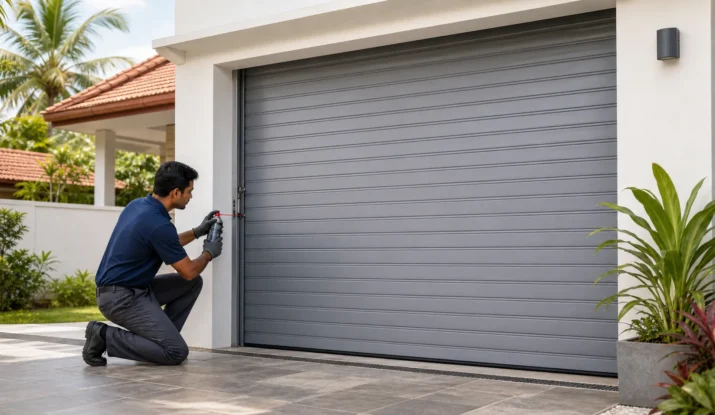
A noisy or heavy roller door is often a sign that the door needs cleaning, inspection, or lubrication. In Sri Lanka, this matters even more because humidity, monsoon rain, dust, and coastal salt air can make moving parts dry, dirty, or rusty faster than expected.
This guide explains how to lubricate roller door parts safely, what lubricant to use, what to avoid, and when a problem should be handled by a trained technician.
Fast Facts: Lubricate Roller Door
Need the quick version? Here are the 7 main things to remember before you lubricate a roller door in Sri Lanka.
- Switch off the opener first. Disconnect power and use the manual release before checking the door.
- Clean before spraying. Remove dust, sand, moisture, and old residue from the door and guide areas.
- Inspect moving parts. Check guides, brackets, locks, fasteners, seals, and rusty areas before lubrication.
- Use silicone spray lightly. Apply a thin coat only to recommended moving-contact points.
- Move the door slowly. Open and close it a few times to spread the lubricant and check for rough movement.
- Wipe away excess lubricant. Extra spray attracts dirt and can make the door messy or harder to operate.
- Call a technician if needed. If the door is heavy, crooked, stuck, rusty, or still noisy, get professional help.
Before You Lubricate: Check If the Door Is Safe
Before applying any spray or oil, look at the door carefully. Lubrication can reduce friction and noise, but it will not fix a damaged spring, bent guide rail, broken bearing, weak motor, or badly rusted part.
Check for these warning signs:
- The door is very heavy to lift by hand.
- The curtain moves unevenly or tilts to one side.
- You hear grinding, scraping, or loud banging sounds.
- The guide rails are bent, loose, or blocked.
- There is visible rust around the bottom rail, brackets, fasteners, or guides.
- The motor runs, but the door struggles to move.
If you notice any of these issues, do not force the door. High-tension parts such as springs, cables, and bottom brackets can be dangerous. Door safety guidance from the Door & Access Systems Manufacturers Association recommends using trained technicians for spring and cable related problems.
Best Lubricant for Roller Doors in Sri Lanka
The safest general choice for most roller doors is a silicone-based spray lubricant. It gives a light, clean coating and is less likely to collect dust than thick grease. This is useful in Sri Lankan homes, shops, garages, and warehouses where dust and moisture often mix inside guide areas.
For some metal-to-metal parts, a light machine oil or suitable lithium spray may be used, depending on the door type and manufacturer recommendation. For lock cylinders, graphite powder is usually better than oil because oil can collect dirt inside the lock.
Avoid using heavy grease on the guide tracks. Thick grease can trap sand, dust, and grit. Over time, that mixture can become abrasive and make the door harder to operate. Also avoid using standard WD-40 as the main long-term lubricant. It can loosen dirt or moisture, but it is not a lasting lubricant for regular roller door maintenance.
Manufacturer maintenance advice from companies such as Gliderol and B&D Australia also highlights the importance of regular inspection, cleaning, corrosion prevention, and using the correct lubricant for the door type.
How to Lubricate Your Roller Door Step by Step
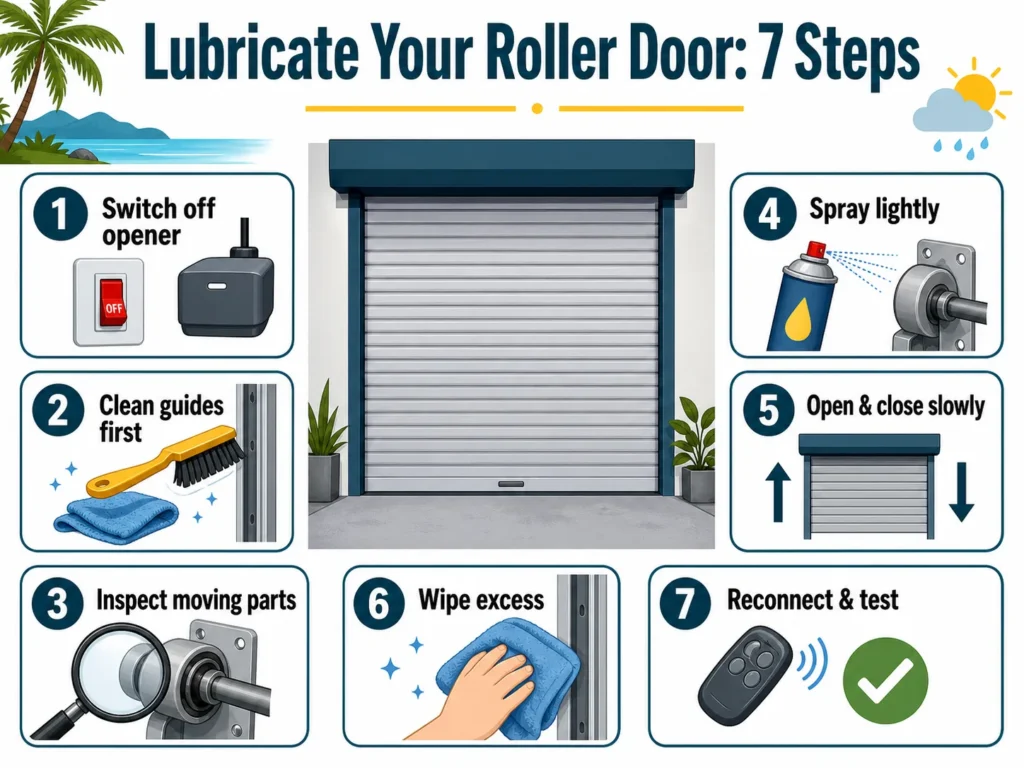
1. Disconnect the automatic opener
If your roller door has a motor, switch off the power and use the manual release according to the installer’s instructions. This helps you check the door movement by hand and prevents accidental operation while you are working.
2. Clean the door and guide areas first
Lubricating over dirt is one of the most common mistakes. Use a soft cloth or brush to remove dust, sand, leaves, spider webs, and old residue from accessible guide areas. For the outside of the door, wash with clean water and a soft cloth, especially if the property is near the sea.
Sri Lanka’s tropical climate includes strong seasonal rainfall and warm conditions. The Sri Lanka government country overview notes the influence of south-west and north-east monsoon rains, while the World Bank Climate Change Knowledge Portal identifies Sri Lanka’s warm, high-rainfall climate patterns. For roller doors, that means trapped moisture should be removed before lubrication.
3. Inspect moving parts
Look at the curtain, guides, axle area, brackets, locks, fasteners, weather seals, and visible moving points. Tighten only simple loose screws if they are clearly accessible and safe. Do not adjust springs, cables, or brackets connected to spring tension.
4. Apply lubricant lightly
Spray a small amount of silicone-based lubricant on the recommended moving-contact areas. Use short, controlled sprays. The goal is a light coating, not a wet surface. If the door has hinges, rollers, or other moving hardware depending on its design, apply lubricant only where the part pivots or moves.
Do not flood the tracks with lubricant. A clean guide is better than a greasy guide full of dust.
5. Open and close the door several times
Move the door slowly by hand if it is safe to do so. This helps spread the lubricant and reveals whether the door is still binding, scraping, or moving unevenly.
6. Wipe away excess lubricant
Use a clean cloth to remove extra spray. Excess lubricant attracts dirt and can drip onto the floor, vehicle, stock, or shop entrance area.
7. Reconnect the motor and test operation
Reconnect the opener only after the door moves smoothly by hand. Test the remote, wall switch, manual release, and safety functions. If the motor still struggles, the issue may be balance, alignment, spring tension, bearing wear, or motor load rather than lubrication.
How Often Should You Lubricate a Roller Door in Sri Lanka?
For many homes, lubricating every six months is a practical starting point. However, Sri Lankan conditions can change the schedule.
- Coastal homes and shops: inspect monthly and lubricate every three to four months if the door is exposed to salt air.
- Inland residential doors: inspect every few months and lubricate about twice a year.
- Busy shops, garages, and warehouses: inspect more often because the door opens and closes many times a day.
- After heavy monsoon rain: clean and dry exposed areas, then lubricate if movement becomes noisy or rough.
Near coastal areas such as Galle, Matara, Negombo, Colombo, and Trincomalee, salt air can speed up corrosion. Research from the University of Moratuwa repository on marine environment corrosion of mild steel in Sri Lankan coastal areas reinforces why exposed metal needs regular cleaning and protection.
Common Mistakes That Damage Roller Doors
The biggest mistake is using too much lubricant. More spray does not mean better protection. It often creates a sticky layer that collects dirt.
Another mistake is greasing dirty tracks. Clean first, lubricate lightly, and wipe away excess. If the door is still noisy after lubrication, do not keep adding more product. Noise may be a symptom of worn parts, poor alignment, or spring imbalance.
Also avoid forcing a stuck roller door. A jammed curtain can bend, a motor can overload, and the guide rails can become damaged. For a business, this can turn a small service issue into a security problem at closing time.
When to Call a Professional
Call a trained roller door technician if the door is heavy, crooked, rusted, stuck, or unsafe to operate. You should also arrange service if the motor strains, the remote system works inconsistently, the manual release is difficult to use, or the door has not been inspected for a long time.
For Sri Lankan homes, shops, warehouses, and garages, the best maintenance habit is simple: keep the door clean, lubricate lightly, check early warning signs, and repair small issues before they become expensive failures.
If you are unsure which lubricant suits your roller door, or if the door is already noisy, heavy, or rusty, Vision Industries can inspect the system and recommend the safest next step.
FAQs About Lubricating Roller Doors
What is the best way to lubricate roller door parts in Sri Lanka?
The best way is to clean the guides first, then apply a light silicone-based spray to recommended moving-contact points. In Sri Lanka’s humid and coastal conditions, avoid over-spraying because excess lubricant can trap dust, sand, and moisture.
Can I use WD-40 to lubricate a roller door?
Standard WD-40 is not ideal as the main long-term roller door lubricant. It may help loosen dirt or moisture, but a proper silicone-based lubricant usually gives better lasting protection for smooth roller door movement.
When should I call a technician instead of lubricating the roller door myself?
Call a technician if the roller door is heavy, crooked, stuck, rusty, or still noisy after lubrication. These signs can point to alignment, spring tension, bearing, bracket, or motor issues that should not be handled as simple DIY maintenance.