
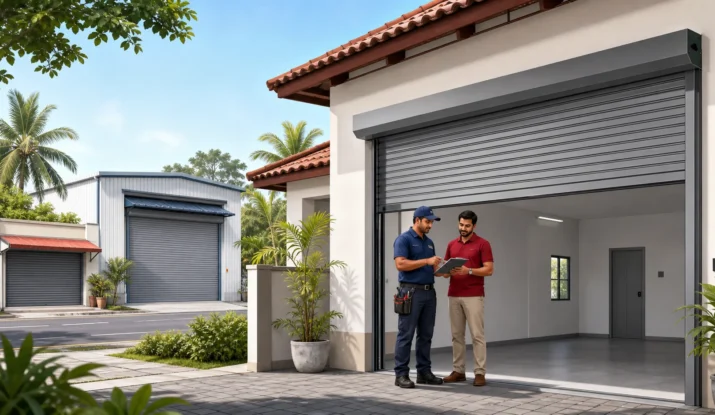
A roller door can look simple from the outside, but several decisions affect how safely and reliably it works. The opening size, curtain material, motor, controls, weather exposure, and daily traffic all matter. Buyers searching for garage roller doors Sri Lanka should therefore compare complete specifications, not only colours and prices. The right door is the one designed for its site, users, and expected workload.
Fast Facts: Choosing a Roller Door
- Choose the door for its workload. Garages, shops, and warehouses have different traffic, security, and motor requirements.
- Arrange a site measurement before ordering. Headroom, side room, fixing strength, and finished vehicle clearance all affect the design.
- For garage roller doors in Sri Lanka, match the material and finish to rain, dust, humidity, and coastal salt exposure.
- Size the motor from the curtain load and operating frequency, not the opening width alone.
- Plan for power cuts with a safe manual override, backup supply, or another controlled entrance.
- Ask which obstruction and entrapment protections will be installed, tested, and demonstrated.
- Compare written specifications, warranty terms, exclusions, spare-parts support, and maintenance arrangements before comparing price.
Start With the Site, Not the Colour
Begin by defining what the door must do. A home garage may open four times a day. A warehouse entrance might complete dozens of cycles while carrying the risk of costly delays if it fails.
Ask how many people and vehicles will use the opening. Record the largest vehicle that must pass through it. Check whether children, customers, delivery workers, or pedestrians could approach the moving door. These details should form part of the installation risk assessment.
A site survey should measure the structural opening, usable width, usable height, headroom, and side room. The installer must also inspect the fixing surfaces and identify space for the barrel, guides, motor, and controls.
Outdoor exposure changes the specification too. Rain, wind, dust, sea air, and poor drainage can affect the curtain, guides, fasteners, electrical parts, and finish.
Match the Door to the Building
A roller door moves vertically inside side guides and coils above the opening. It needs no swing area, which helps on short driveways and busy loading areas. However, garages, warehouses, and shops do not place the same demands on the system.
Home garages
Most homes need quiet operation, convenient controls, dependable locking, and a finish that suits the property. Automation can be useful when the driver would otherwise leave the vehicle to open the door.
Confirm that the door provides enough clear height after installation. A poorly planned barrel position can reduce clearance for a van, roof rack, or tall vehicle.
Warehouses and workshops
Commercial doors may be larger, heavier, and used more often. The curtain, barrel, guides, supports, and motor must work as one engineered system.
Ask the supplier to calculate the motor from the actual curtain load and operating frequency. A motor that lifts the door during a demonstration may still be unsuitable for repeated daily cycles. Businesses should also consider downtime, emergency access, and service response.
Shops
A street-facing shop usually needs strong after-hours security. The owner may also want daytime visibility or ventilation. Solid, perforated, or transparent sections can serve different purposes.
Discuss locking, control access, guide strength, and how the bottom edge meets the floor. Gaps caused by an uneven threshold can weaken weather protection and security.
Choose Materials for Sri Lankan Conditions
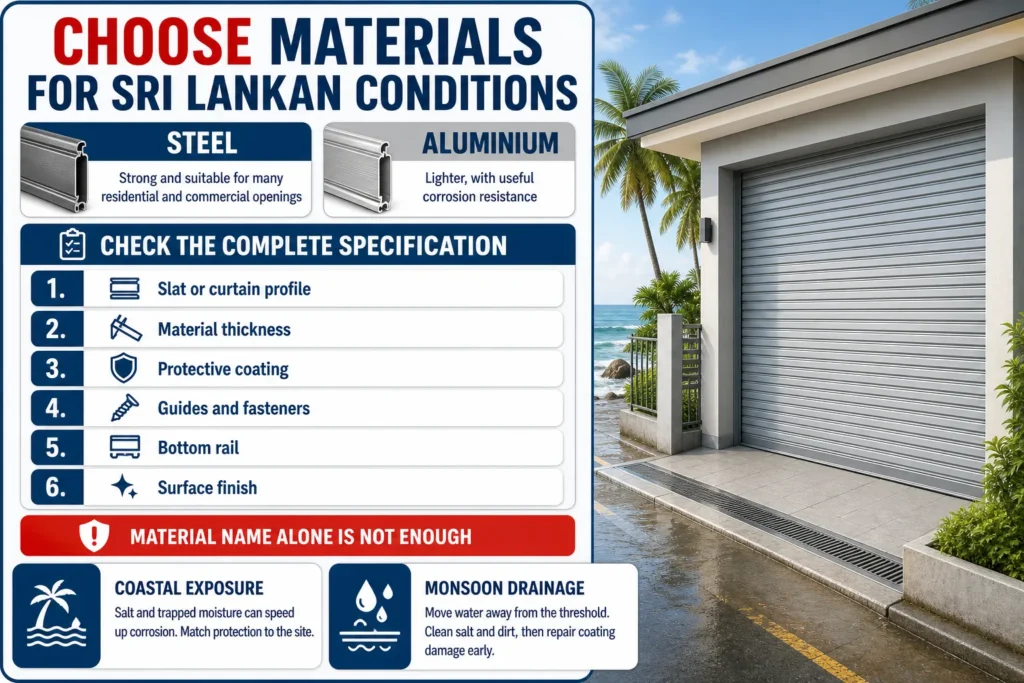
Steel is widely used because it offers strength and can suit residential or commercial openings. Aluminium has lower weight and useful corrosion resistance, but the correct profile and construction still depend on the opening and security level.
Do not compare doors by material name alone. Ask about the slat or curtain profile, thickness, protective coating, guides, fasteners, bottom rail, and finish. Two steel doors can perform very differently.
Coastal properties need special attention. Salt carried in sea air can speed up corrosion, while moisture can remain inside guides and around fixings. Ask the supplier to recommend a corrosion-protection system for the actual distance from the coast and degree of exposure.
Good drainage also matters during monsoon rain. Water should move away from the threshold rather than collect beneath the curtain. Owners should wash away dirt and salt deposits using the approved cleaning method, then repair coating damage before rust spreads.
Check the Motor, Safety and Power-Cut Plan
An automatic roller door needs more than a motor and remote. The installer should match the drive to the curtain weight, shaft, friction, door size, and required duty cycle. Duty cycle describes how often the motor can operate without overheating.
Plan for power cuts before installation. Ask how the door can be opened manually, who can reach the release, and whether the process remains practical with a heavy curtain. A warehouse may also need backup power or another controlled entrance.
Powered doors can trap or strike people. Appropriate protection may include a safety edge, presence sensor, force control, guarded moving parts, and a clearly positioned stop control. The correct combination depends on the site and its users.
Ask the installer to test the safety functions after installation. Staff and household members should receive a demonstration. Keep children away from controls and never allow anyone to pass under a moving curtain.
Avoid the Quote Traps That Cost More Later
The lowest initial price may exclude work that another quotation includes. Compare written specifications line by line.
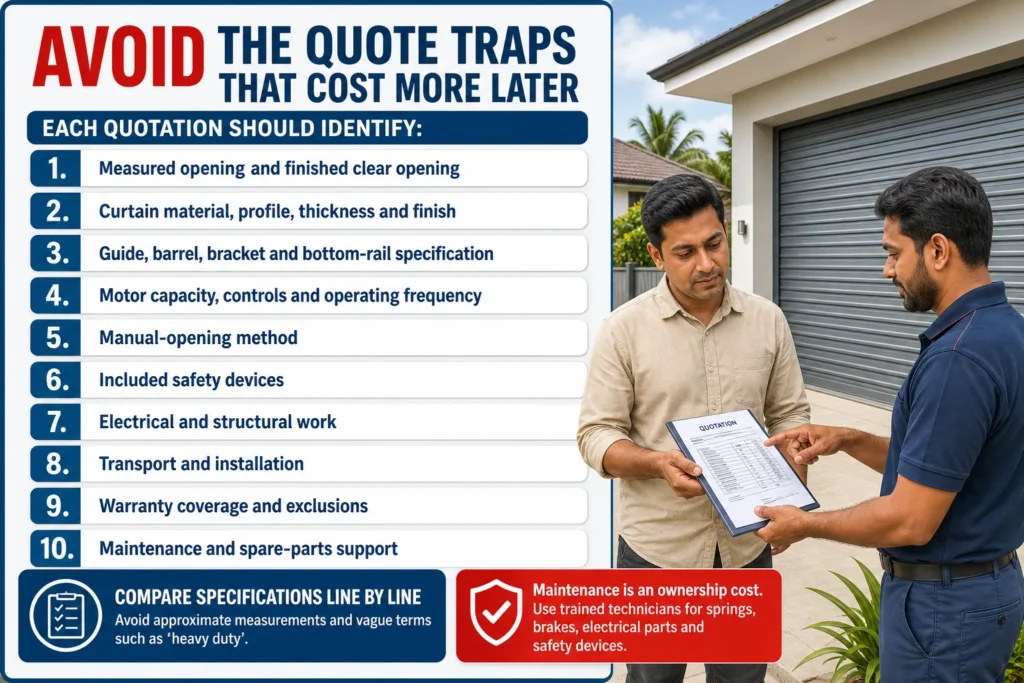
Avoid ordering from approximate measurements. Do not accept unclear phrases such as heavy duty without supporting specifications. Ask who will complete the installation and commissioning.
Maintenance is another ownership cost. Cleaning tracks, watching for unusual noise, and reporting damage early can prevent larger problems. Springs, brakes, electrical components, and safety devices require trained attention. Do not attempt adjustments that release stored spring tension.
Helpful Guide
Before choosing a supplier, review what to expect from a reliable roller-door warranty and after-sales service in Sri Lanka.
Use This Final Buyer’s Checklist
Before approving an order, confirm:
- Is the door designed for a garage, shop, or industrial workload?
- Has the supplier completed a site measurement?
- Will the finished opening clear every expected vehicle?
- Does the material and finish suit rain, dust, and coastal exposure?
- Is the motor matched to the load and daily cycle count?
- Can authorised users open the door safely during a power cut?
- Which safety devices will be installed and tested?
- Are locking and control permissions suitable for the property?
- What work is excluded from the price?
- Who provides warranty service, spare parts, and maintenance?
For garage roller doors in Sri Lanka, the best choice is not a single material or motor. It is a complete system matched to the building. An experienced provider such as Vision Industries can inspect the site, explain the trade-offs, and coordinate manufacturing, installation, automation, and after-sales support.
Frequently Asked Questions
Which roller door is best for a home garage in Sri Lanka?
The best home garage roller door matches the opening, vehicle clearance, weather exposure, and daily use. Choose a suitable protective finish, dependable locking, safe controls, and a motor sized for the curtain. Coastal homes may need stronger corrosion protection.
Can an automatic roller door open during a power cut?
An automatic roller door can open during a power cut if it has a safe manual override, backup power, or another planned access route. Ask the installer to demonstrate the procedure during handover and ensure authorised users can reach the release safely.
What should a roller-door quotation include?
A complete quotation should state the measured opening, curtain specification, guides, barrel, motor, controls, safety devices, finish, installation, wiring scope, warranty, and exclusions. Compare these details rather than the total price alone, and confirm who provides maintenance and spare parts.