
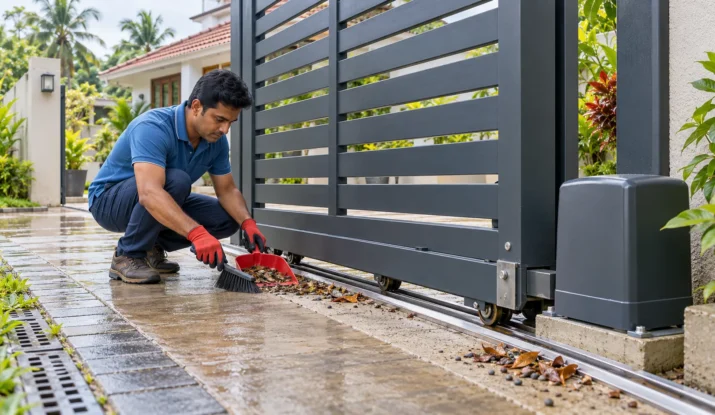
A small stone can cause a surprisingly large interruption to a sliding gate. Leaves, sand, and mud can also collect along the rail, especially after rain or gardening work.
Regular sliding gate track cleaning removes these obstructions before they become packed around the wheels. The safest approach is a short inspection routine based on your site conditions and the gate manufacturer’s instructions.
Fast Facts: Sliding Gate Track Cleaning
- Remove stones, leaves, sand, and mud before they become packed around the gate wheels.
- Disconnect both mains power and any backup battery before cleaning an automatic gate.
- Inspect weekly, check more closely each month, and clean again after storms or nearby building and gardening work.
- Use a broom, nylon brush, vacuum, and lightly damp cloth. Avoid pressure washing the automation.
- Do not grease the exposed rail unless the manufacturer specifically instructs you to do so.
- Arrange professional help for loose rails, damaged concrete, deep corrosion, exposed wiring, or persistent abnormal operation.
Why Small Debris Creates a Big Gate Problem
A tracked sliding gate carries much of its weight on wheels that travel along a ground rail. Those wheels need a clear, firm path.
A stone can sit on top of the rail or become trapped beside it. Mud can harden around fasteners, while leaves can hold moisture against the metal. Manufacturer guidance also identifies mud, rocks, and dirt as possible track obstructions.
Repeated obstruction does more than make the entrance untidy. It can interrupt access and place avoidable demand on the gate system. Cleaning is therefore simple preventive care.
However, cleaning cannot correct a bent rail, loose wheel, damaged foundation, or automation fault. Those conditions need professional assessment.
How Often Should You Inspect the Track?
There is no single interval that fits every gate. Start with the maintenance schedule in the owner’s manual, then adjust the routine for the property.
Use this practical starting point:
- Look along the visible track whenever you use the entrance.
- Sweep or remove obvious debris each week.
- Complete a closer inspection once a month.
- Check immediately after heavy rain, strong wind, gardening, construction, or gravel delivery.
- Inspect more often where sand, falling leaves, or loose stones regularly reach the rail.
Sri Lanka receives rain through four seasonal periods. Wet weather can wash soil, gravel, and organic material across an exposed driveway track. A quick inspection after a storm may therefore be more useful than relying only on a calendar.
Commercial entrances may need more frequent checks because they complete more operating cycles. Assigning the inspection to a named employee can prevent the task from being overlooked.
Prepare Before Cleaning an Automatic Gate
Gather a stiff broom, small nylon brush, dustpan, gloves, and a dry cloth. A vacuum with a narrow attachment may help with dry sand. Use a plastic or wooden tool for compacted material rather than a sharp metal object.
Before approaching an automatic gate, keep children, pets, vehicles, and other people outside its operating area. Use the normal control to position the gate only while you remain clear.
Then disconnect the main supply and any backup battery, following the owner’s manual. Store remote controls so another person cannot operate the gate.
Never place your hands beneath the gate. Do not remove guards, open the motor housing, adjust electrical parts, or release the drive unless the manual permits that work and you know the correct procedure.
Sliding Gate Track Cleaning, Step by Step
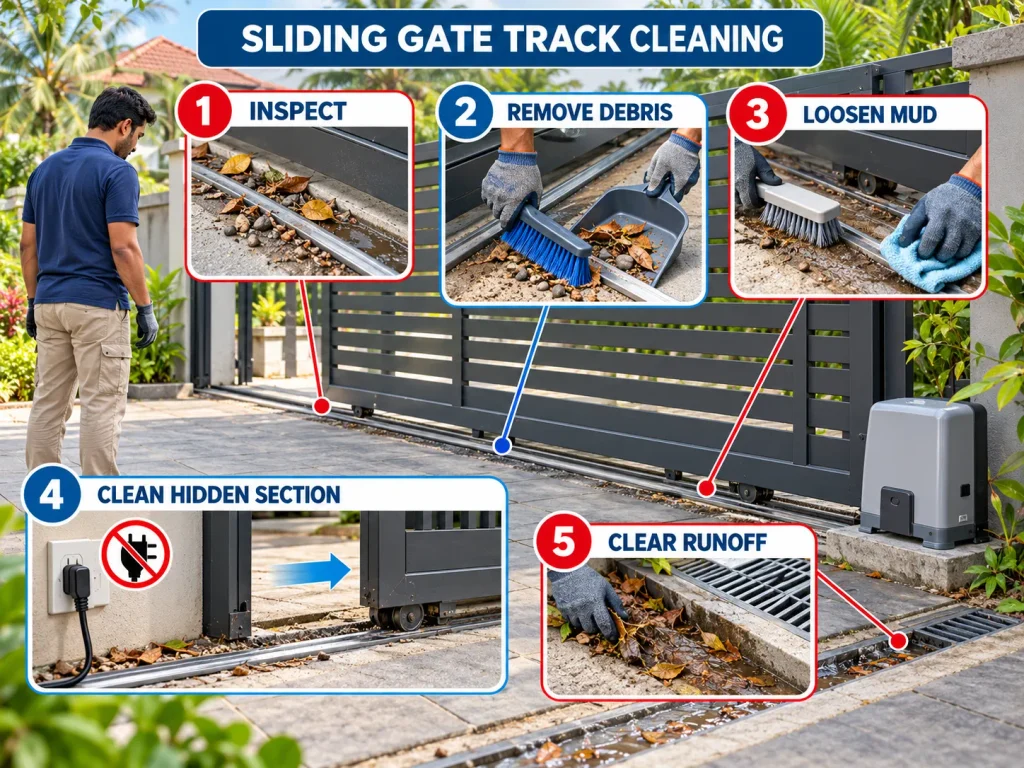
1. Inspect the Full Route
Stand clear and examine the track from the closed end to the open end. Note piles of leaves, mud, loose stones, standing water, and any object touching the rail.
Also check the area beside the track. A clean rail will not remain clean if a nearby gravel edge or blocked drain keeps feeding debris onto it.
2. Remove Loose Material First
Pick up larger stones with gloved hands or a suitable tool. Sweep leaves, sand, and loose soil away from the track and the motor area.
Brush along both sides of the rail. Avoid pushing grit into wheel housings, covers, cable routes, or the operator enclosure.
3. Loosen Compacted Mud Carefully
Use a nylon brush or a plastic tool to loosen dried mud. Wipe the remaining film with a lightly damp cloth, then dry the rail.
Do not direct a pressure washer at the track, motor, sensors, switches, or electrical enclosure. A strong jet can move grit into protected areas and may damage finishes or electrical components.
4. Clean the Hidden Section Safely
A section of track normally sits behind the gate. If it cannot be reached safely, restore power, move the gate using its normal control, and isolate every power source again before cleaning.
Never reposition the gate while someone is brushing, kneeling, or reaching near it. Do not try to hold an automatic gate in place by hand.
5. Clear the Surrounding Runoff Path
Remove mud and leaves from nearby surface channels or drain openings that you can reach safely. Direct runoff away from the rail where possible.
If water repeatedly crosses or pools beside the track, cleaning alone will not solve the cause. Ask an experienced installer or drainage professional to assess the area.
Inspect the Clean Track for Damage
Cleaning gives you a clear view of the rail and its supports. Look for:
- Loose or missing track fasteners.
- Raised, bent, cracked, or separated rail sections.
- Broken concrete around mounting points.
- Deep rust, flaking coatings, or sharp metal edges.
- Soil erosion or settlement beside the rail.
- Water remaining after the surrounding surface has drained.
- Repeated piles of gravel at the same location.
Do not tighten structural fixings, grind the rail, or paint moving contact surfaces unless the manufacturer approves the method. Mark the affected area and arrange an inspection.
Also identify the source of repeat contamination. A narrow paved strip, gravel edging, repaired drain, trimmed vegetation, or small kerb may reduce the amount of debris reaching the track. Any change must preserve drainage and the gate’s safe operating space.
Finish the Routine and Know When to Stop
Remove all tools and people from the operating area. Reconnect the battery and main supply in the sequence stated by the manufacturer.
From a safe position with a clear view, operate one complete opening and closing cycle. The purpose is only to confirm that the area is clear. Do not make force, speed, limit, motor, or safety-device adjustments.
Record the date, weather conditions, and anything unusual. A simple log can show whether debris returns after rain, landscaping, or vehicle movement.
Stop using the gate and request professional help if you find a loose rail, damaged concrete, exposed wiring, severe corrosion, or water entering electrical areas. Do the same if abnormal operation remains after the track is clean.
Vision Industries can inspect and maintain sliding gate systems across Sri Lanka when routine cleaning reveals a condition that needs technical attention.
Frequently Asked Questions
How often should a sliding gate track be cleaned?
Inspect the visible track during normal use, remove obvious debris weekly, and complete a closer check monthly. Clean it again after heavy rain, gardening, construction, or gravel delivery. Follow the gate manufacturer’s schedule if it requires more frequent sliding gate track cleaning.
Can I pressure wash a sliding gate track?
Avoid using a pressure washer near a sliding gate track, motor, sensors, or electrical enclosure. The jet can drive water and grit into protected components. Sweep or vacuum loose debris first, then use a nylon brush and lightly damp cloth for remaining mud.
Should I grease the sliding gate rail after cleaning it?
Do not apply grease to the exposed rail unless the gate manufacturer specifically requires it. Thick grease can hold sand and grit against the surface. Keep the rail clean and dry, and use only approved lubricants at the points identified in the owner’s manual.