
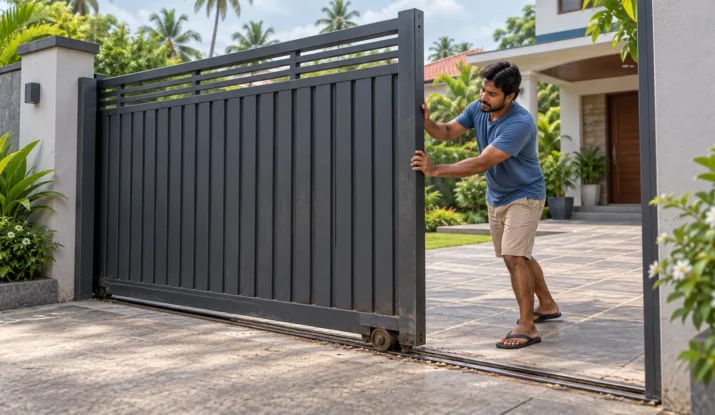
If your sliding gate is hard to open, the resistance is a symptom rather than the fault itself. The cause may be a damaged wheel, a tight guide, a distorted track, frame contact, or movement beneath the gate.
Do not keep pulling harder. First, notice where the resistance begins and whether it changes through the gate’s travel. That pattern often reveals which component needs attention.
Fast Facts
- A sliding gate that is hard to open usually has a rolling, alignment, contact, or support problem.
- Resistance at one repeatable point suggests a local track, wheel, foundation, or clearance fault.
- Resistance through the full travel can indicate seized bearings, worn wheels, tight guides, or a sloping track.
- Scratches, polished metal, grinding, wobbling, and uneven gaps help locate the cause.
- Rain, humidity, coastal salt, drainage problems, and settlement can make resistance worse.
- Do not grease an exposed running rail unless the manufacturer specifically requires it.
- Stop using the gate if it leans, lifts, leaves its track, or needs body weight to move.
Sliding Gate Hard to Open? Start With the Symptom
Move the gate slowly while keeping people, vehicles, and pets away. Use normal hand pressure and stop if the gate leans, lifts, or threatens to leave its supports.
Watch for these patterns:
- Heavy throughout the full travel: A wheel bearing may be seizing, several wheels may be worn, or guide rollers may be squeezing the frame. A sloping track can also make one direction harder.
- Sticks at the same point: Look for a damaged rail section, local foundation movement, a wheel defect, or contact with a post or wall.
- Hard only when starting: A bearing may resist after standing, a latch may not release fully, or corrosion may be affecting a shaft.
- Harder near the closed position: The gate may be rubbing against the receiver, latch, end catch, or closing post.
- Scrapes, jumps, or wobbles: The track, wheels, guide rollers, or frame may no longer share the load correctly.
A visible loose obstruction can also create a sudden hard spot. Routine debris removal is a separate maintenance task, however. If resistance returns in the same place, inspect the supporting components instead of assuming the track simply needs another clean.
Check How the Gate Rolls and Carries Its Weight
On a ground-tracked gate, the wheels should rotate as the gate moves. A wheel that slides along the rail may have a seized bearing. A wheel that rocks from side to side may have a worn bearing, axle, or mounting box. Manufacturer guidance confirms that wheels and guide rollers should rotate freely.
Listen for grinding, clicking, or a repeating knock. A sound that returns once per wheel rotation often points to a damaged wheel or bearing. A continuous scrape suggests contact with the track, ground, or another fixed surface.
Inspect the track from a safe standing position. Raised joints, bent sections, loose fasteners, or cracked concrete can create local resistance. A polished or rusty contact mark may show where the wheel is climbing or rubbing.
Cantilever gates work differently. They hang from roller carriages beside the opening instead of running on a rail across the driveway. Resistance on this design can come from worn carriage rollers, poor carriage alignment, or a distorted internal track.
Do not apply oil or grease to the running rail unless the gate manufacturer specifically requires it. Lubricant on an exposed track can hold abrasive dirt. Bearings and enclosed mechanisms may have different lubrication requirements.
Look for Guides, Posts, and Latches Causing a Bind
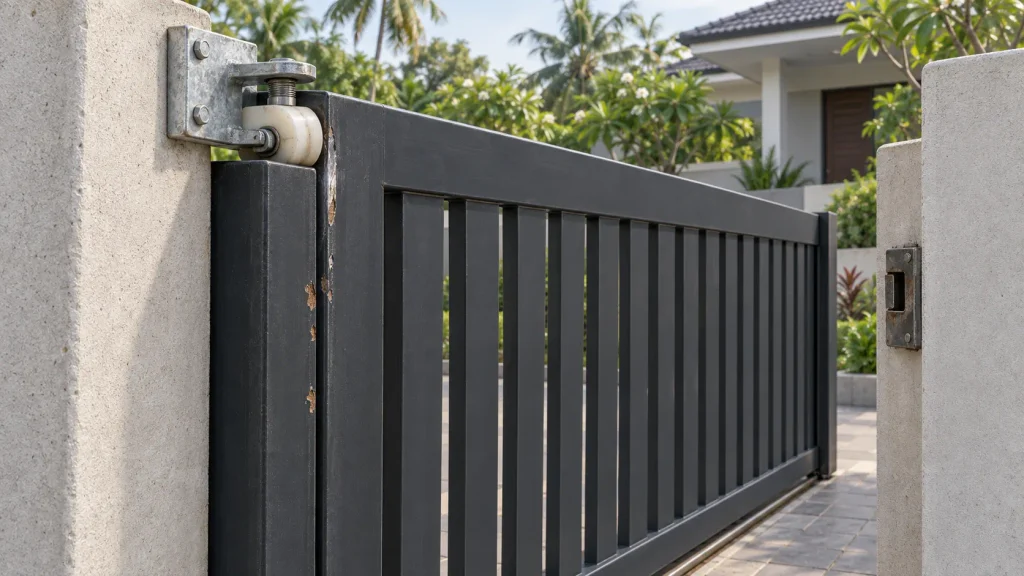
Top guide rollers keep the gate upright. They should control sideways movement without clamping the frame. If they sit too tightly, the gate may feel heavy throughout its travel or bind where the frame is slightly wider.
Look along the frame for fresh scratches, chipped paint, polished metal, and uneven gaps. These clues can reveal contact with a guide roller, fence, wall, kerb, or post.
A sagging or twisted frame can move normally in one section but rub in another. An impact from a vehicle may also shift the track, wheel brackets, or closing post without leaving dramatic damage.
Latch alignment offers another clue. If the latch suddenly needs lifting, pulling, or force, the gate or receiving post may have moved. Adjusting the latch alone may hide the underlying alignment problem.
Why Rain and Coastal Conditions Can Make It Worse
Sri Lanka’s rainfall and high humidity expose outdoor gate hardware to long periods of moisture. Coastal properties also face salt carried through the air.
Rust around wheel boxes, axles, guide brackets, and fasteners can increase friction. Corrosion beneath a protective coating may also expand and distort close-fitting parts.
Rain can expose structural problems too. Runoff may wash material from beneath a track foundation. Wet soil can settle, and cracked concrete may move enough to create a new high point.
Compare the gate’s behaviour during dry and wet periods. A seasonal change in resistance suggests checking corrosion, drainage, concrete support, and alignment rather than only the visible rail surface.
Diagnose the Problem Without Creating a Safety Risk
Begin with a controlled observation:
- Keep the entrance clear and unlock the gate fully.
- Move it slowly through the normal travel.
- Note the exact point where resistance changes.
- Watch whether every visible wheel turns.
- Listen for scraping, grinding, clicking, or knocking.
- Look for fresh contact marks, leaning, or loose hardware.
Keep your fingers away from wheels, guide rollers, posts, and narrowing gaps. Never place a hand or foot beneath the gate. Do not loosen guide brackets, wheel assemblies, end stops, or anti-derailment hardware unless the gate has been safely supported.
Stop using the gate if it leans, lifts from the rail, has a missing guide, overruns a stop, or needs body weight to move. A heavy gate can shift or fall when a supporting component fails.
Related Insight
Planning a new installation? Learn how much side space a sliding gate needs for a narrow entrance before choosing the gate size and layout.
Repair the Cause Before Forcing or Automating the Gate
Match the repair to the evidence:
- Replace a wheel or bearing that does not rotate correctly.
- Repair and realign a bent, lifted, or unsupported track.
- Adjust guides that bind while keeping the gate safely restrained.
- Correct frame, receiver, and latch alignment together.
- Repair cracked supports, severe corrosion, or structural distortion.
- Investigate drainage or settlement when the fault changes after rain.
Do not use a motor to overcome mechanical resistance. A gate should move freely in both directions before automation. Otherwise, the motor works harder, components wear faster, and safety systems may not behave as intended.
Arrange a professional inspection if the fault involves structural supports, derailment risk, welding, wheel removal, or recurring alignment changes. An experienced gate specialist such as Vision Industries can assess the complete movement path and identify whether adjustment, component replacement, or structural repair offers the safest long-term result.
Frequently Asked Questions
- Why does my sliding gate stick at the same point?
- A repeatable hard spot usually indicates a local fault. Possible causes include a bent or lifted track section, a damaged wheel, cracked supporting concrete, or contact with a post. Stop forcing the gate if it lifts, jumps, or leans.
- How can I tell if a sliding gate wheel bearing is damaged?
- A damaged bearing may make the wheel skid, wobble, grind, or resist turning. Move the gate slowly and observe the visible wheels without touching them. A repeating knock or resistance linked to each wheel rotation also suggests wheel or bearing damage.
- Should I keep using a manual gate that is very hard to open?
- No, stop using it if normal hand pressure cannot move it safely. Continued force can worsen wheel, track, guide, or frame damage. Arrange an inspection immediately if the gate leans, leaves the rail, has a loose guide, or requires body weight.
1 Comment
Keeping Sliding Gate Tracks Clear of Stones and Debris – Vision Industries
[…] cleaning does not restore easy movement, use this guide to understand why a manual sliding gate may be hard to open and when professional inspection may be […]